India’s ports, policies & partnerships under spotlight at IMW’s Cruise Tourism Session in Mumbai
 Cruise & Passenger Economy Forum
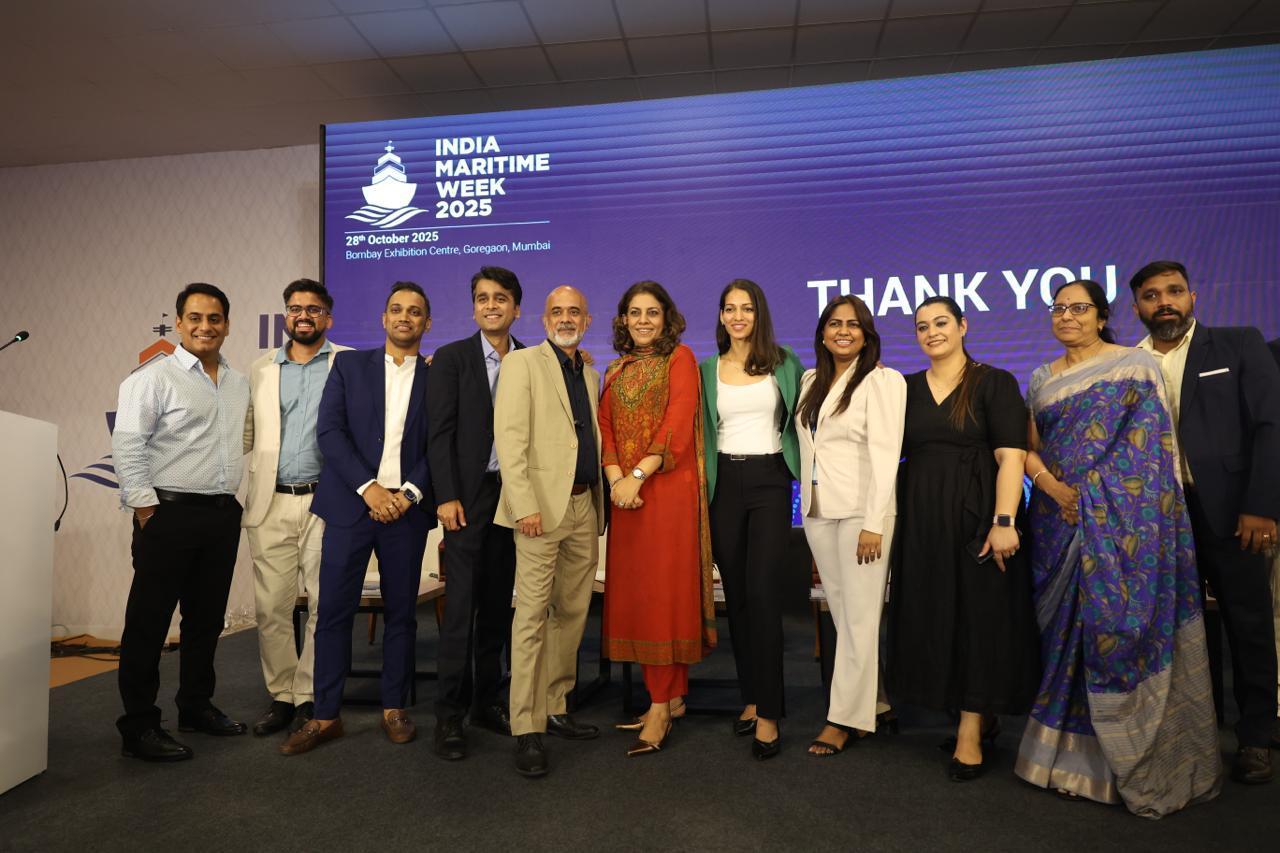
The Cruise & Passenger Economy Forum, convened on the sidelines of India Maritime Week 2025 on October 28, 2025 at the Bombay Exhibition Centre, spotlighted India’s growing prominence in global cruise tourism and its potential to become a leading hub in Asia. The session was organised by Mumbai Port Authority under the aegis of the Ministry of Ports, Shipping and Waterways, Government of India and was facilitated by Informa Markets.
Anchored around the Maritime Amrit Kaal Vision 2047 and the Cruise Bharat Mission, the Forum drew participation from international cruiselines, senior government officials, industry leaders, state port authorities, and cruise operators.
The Forum, featuring two panels, successfully brought together India’s maritime and tourism leadership on a common platform. The deliberations established a shared understanding that India’s cruise potential lies in synergy, between modern infrastructure, simplified processes, sustainability, and destination readiness.
Delivering a special address, the Chief Guest, Vijay Kumar, Secretary, Ministry of Ports, Shipping and Waterways, Government of India emphasised that cruise tourism is a major growth pillar under the Maritime Amrit Kaal Vision 2047, which aims to place India among the top 10 global cruise destinations by 2047.
“The vision outlines the development of six major international cruise hubs — at Mumbai, Goa, Kochi, Chennai, New Mangalore and Visakhapatnam, along with 35 smaller cruise terminals and jetties across coastal and inland waterways. The goal is to make India one of the top 10 cruise destinations globally, increasing annual cruise passenger numbers from the current half a million to five million by 2047,” he said.
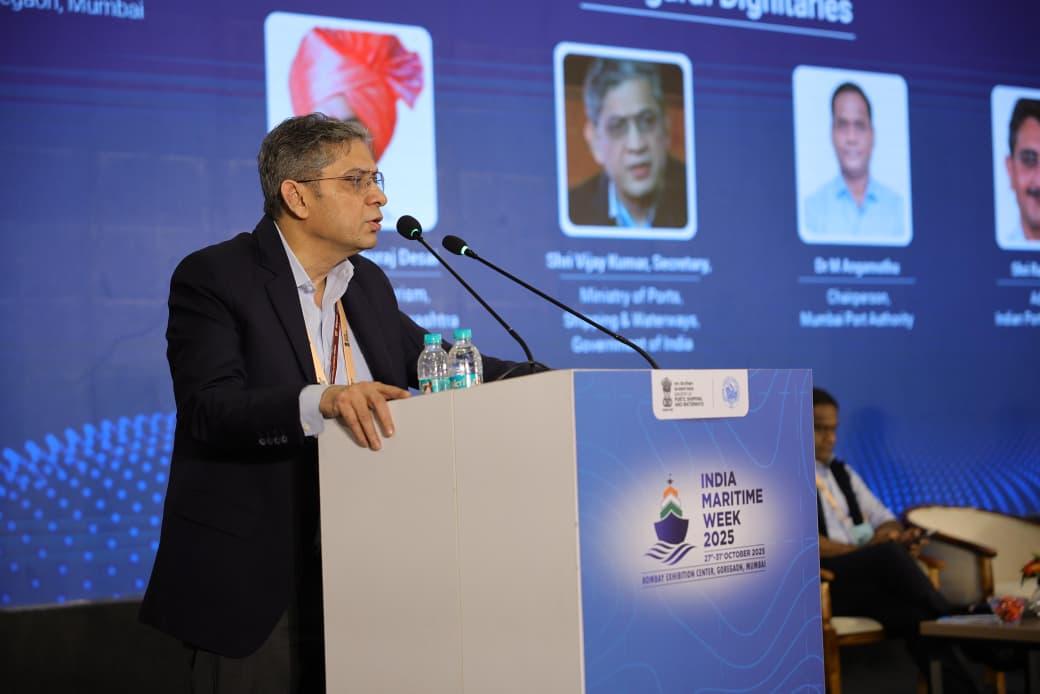
“In terms of ease of doing business, MoPSW has implemented digital and procedural reforms to make cruise operations seamless. We have simplified customs and immigration procedures and introduced rationalized port tariffs for passenger vessels across all Indian Cruise Ports,” added Kumar.
Speaking of river & Inland Cruise Growth, he highlighted that over 20,000 km of navigable waterways identified. River cruise passengers are also projected to reach 1 million by 2027 and 1.5 million by 2029. Further, the operational river cruise terminals are poised to increase from 124 to over 200.
Besides sustainability initiatives, equally essential are destination readiness and workforce development, as per Kumar. The Shipping Ministry is working with the Ministry of Tourism and state governments to ensure that port cities and nearby destinations offer high-quality visitor experiences.
The Secretary at the end, urged all stakeholders to align efforts toward building a modern, sustainable, and globally competitive cruise ecosystem.
Governance is working, the welcome is warm; bring your ships:
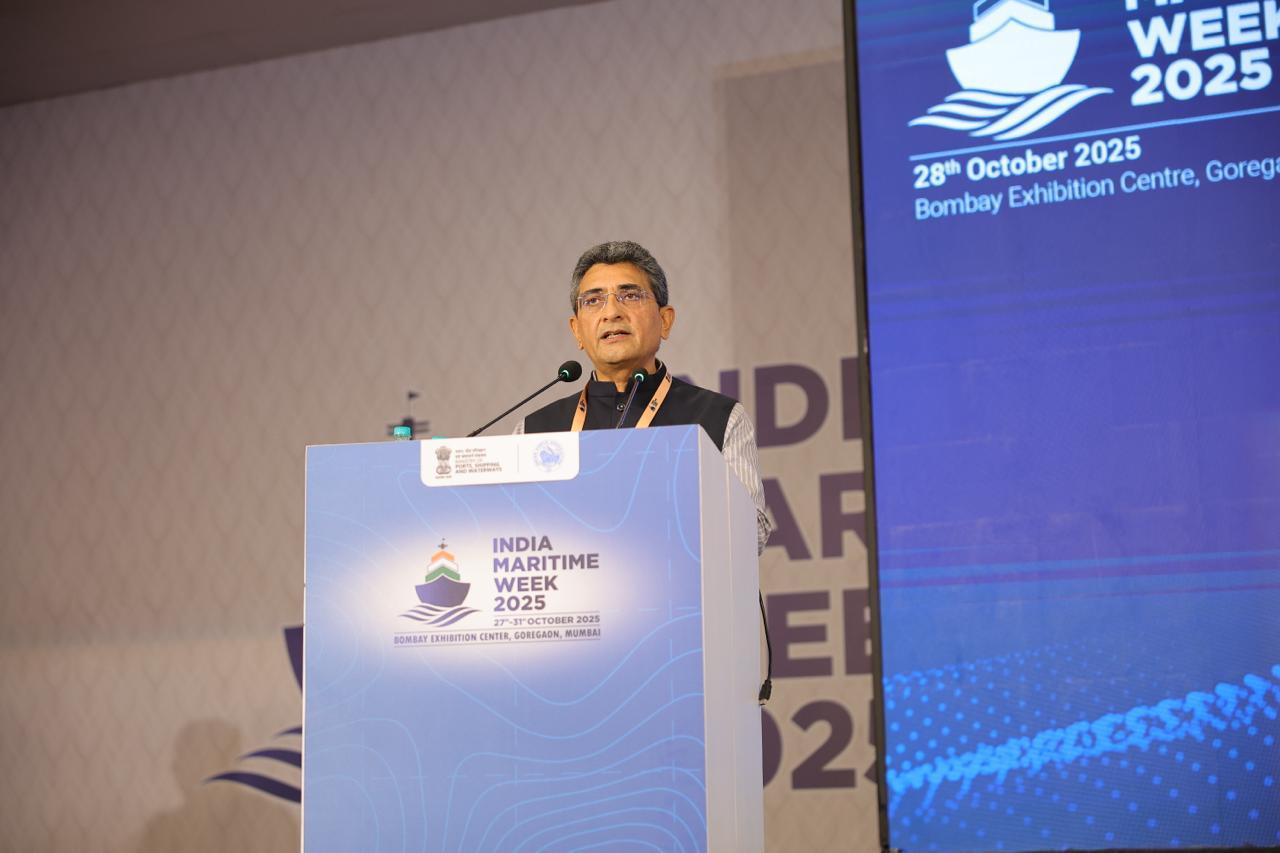
Followed by his remarks, Advisor to Indian Ports Association (IPA), Rajiv Jalota outlined the vision and progress of the Cruise Bharat Mission (CBM), India’s flagship initiative to transform its rivers and coastline into world-class cruise tourism circuits. He emphasised that the mission is built around three key investor concerns: predictable demand, bankable projects, and clear policy signals.
Besides the five core pillars that helps the mission in making India a globally competitive cruise hub, Jalota outlined ambitious CBM outcomes. 10 sea cruise terminals, 100+ river cruise terminals, 5 marinas, 1 million sea cruise passengers, 1.5 million river cruise passengers, 5,000 km of operational waterways, and 0.4 million new jobs.
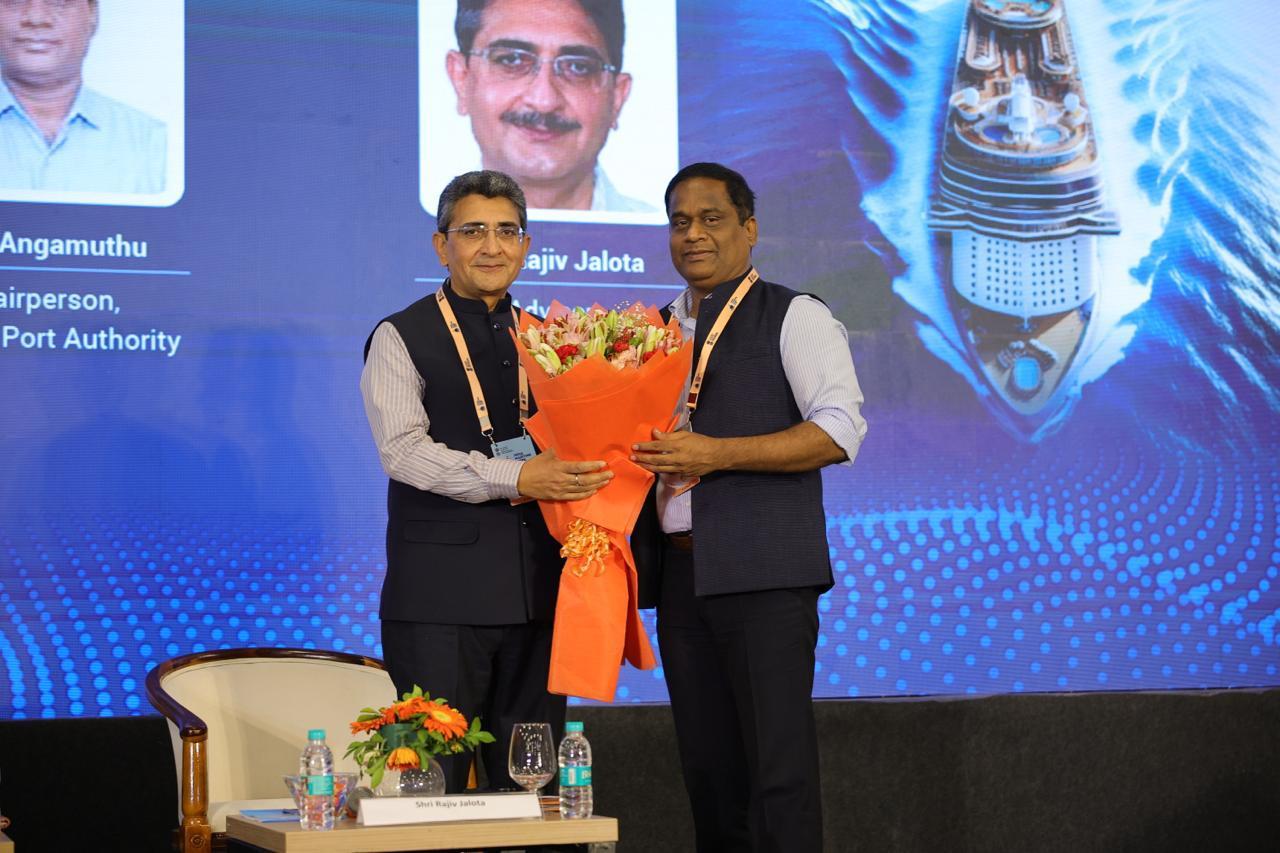
Inviting private participation, he urged investors to engage in PPP models for terminals and marinas, contribute to homeporting and route planning, and invest in shore experiences, F&B, logistics, repair, and training. “The governance is working, the welcome is warm; bring your ships, we will bring the guests and the experiences to match.”
The Chairman of the Mumbai Port Authority, Dr. M. Angamuthu highlighted the significance of Mumbai International Cruise Terminal, a world-class facility symbolising India’s growing maritime and cruise tourism ambitions. Drawing on India’s rich maritime heritage and ancient navigation traditions, he underlined that India has long been a maritime civilisation, leveraging its expertise in seafaring, trade, and now, leisure cruising. He stressed that events like India Maritime Week 2025, with a focused theme on the maritime economy, embody the Amritkaal mission by catalysing opportunities for growth, employment and global visibility for India.
He acknowledged the active participation of several cruise destinations such as Goa, Cochin, Mangalore, Vizag, and Chennai, all of which now offer world-class facilities ready for international deployment. Emphasising collaboration and openness, he invited global cruise operators to homeport and expand their itineraries in India, noting that both the Ministry and the Port Authorities stand committed to offering full facilitation and support.
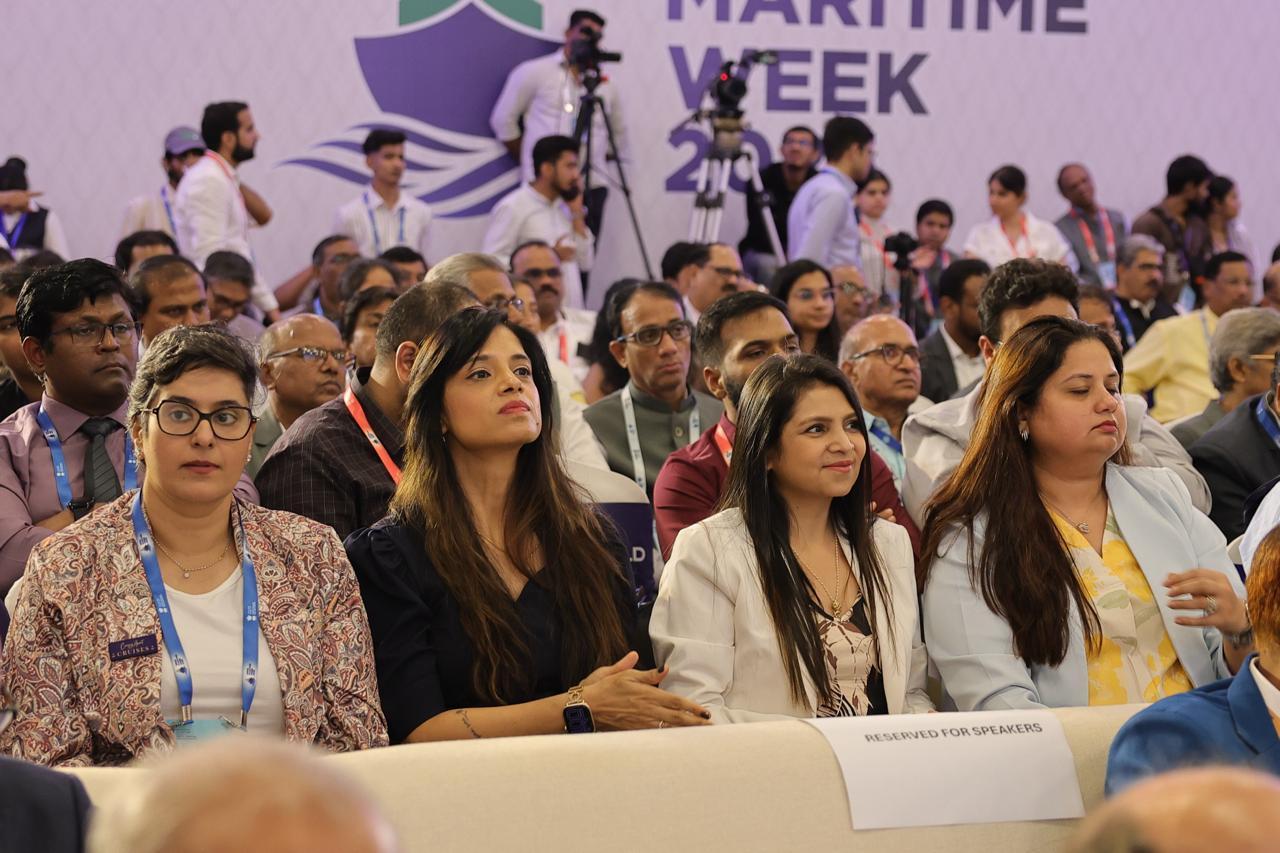
Panel discussion takeaways:
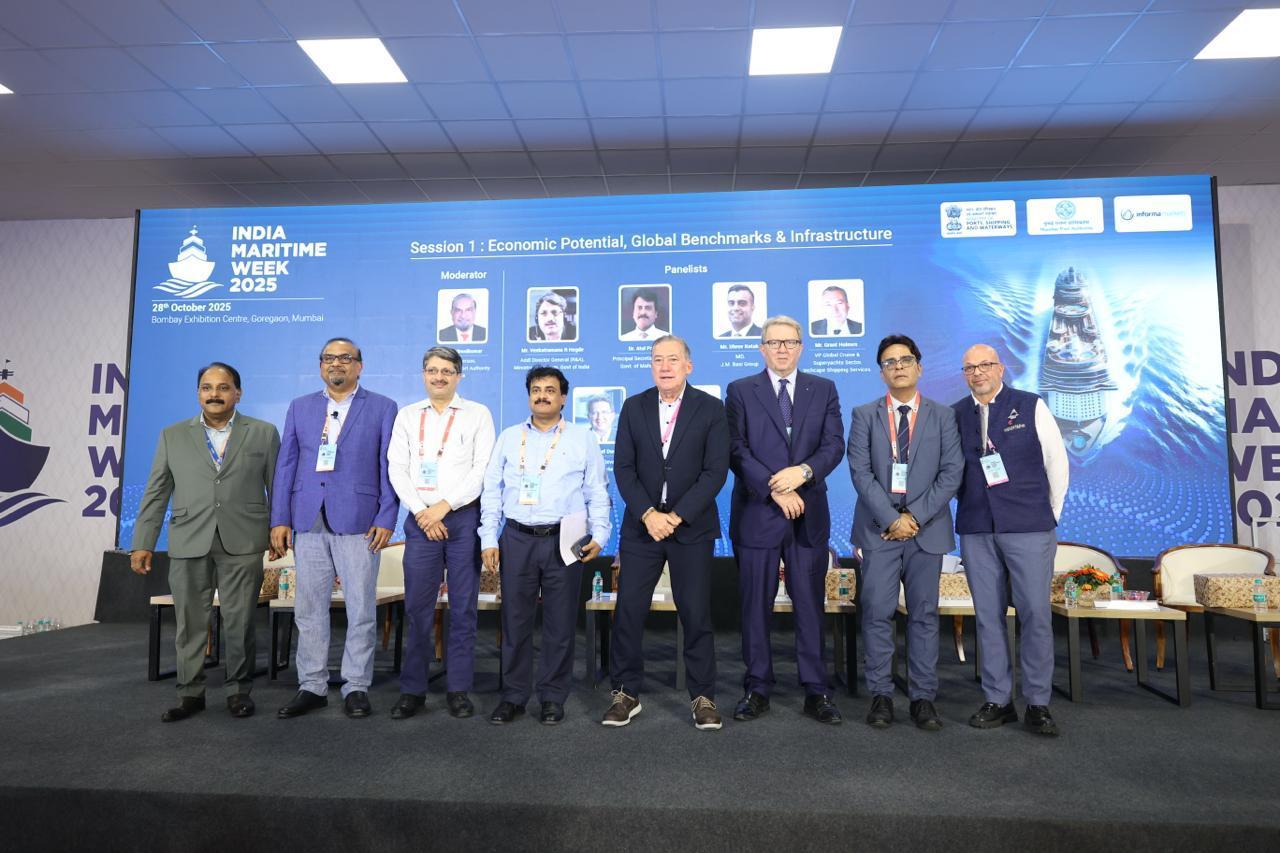
The 4-hour session also featured two panel discussions. The first deliberation around “Economic Potential, Global Benchmarks & Infrastructure” featured Dr. N. Vinodkumar, Chairperson, Mormugao Port Authority as the Moderator. The panellists included Venkatramana R Hegde, Addl Director General (R&A), Ministry of Tourism, Govt of India, Dr. Atul Patne – Principal Secretary Tourism, Govt. of Maharashtra, Dhruv Kotak, MD, J.M. Baxi Group, Grant Holmes - VP Global Cruise & Superyachts Sector, Inchcape Shipping Services, Michael Duck - EVP Commercial Development, Informa Markets, Naresh Rawal, Senior Vice President Sales and Marketing, StarDream Cruises and Jurgen Bailom - President & CEO, Waterways Leisure Tourism Ltd.
Kotak from JM Baxi Group highlighted the potential for tenfold growth in international passenger travel, with cruise ships evolving into multi-role vessels serving as hotels, exploratory platforms, and experience centers. Companies like Cordelia are pioneering this transformation, but the infrastructure challenge is immense - with each cruise ship bringing up to 3,500 passengers, cities must rapidly develop their road networks, airport connectivity, hotel capacity, and emergency management systems to handle such massive influxes.
Holmes emphasized that while "India is Incredible" and has strong destination appeal, the operational complexity remains a significant barrier. The current framework involving customs, GST, landing charges, and immigration processes creates high complexity that needs streamlining. However, the market potential is vast - from discovery ships to expedition vessels, India has only "touched the tip of the iceberg." The key lies in developing commercial viability through taxation reforms, competitive incentives, and robust marketing support infrastructure.
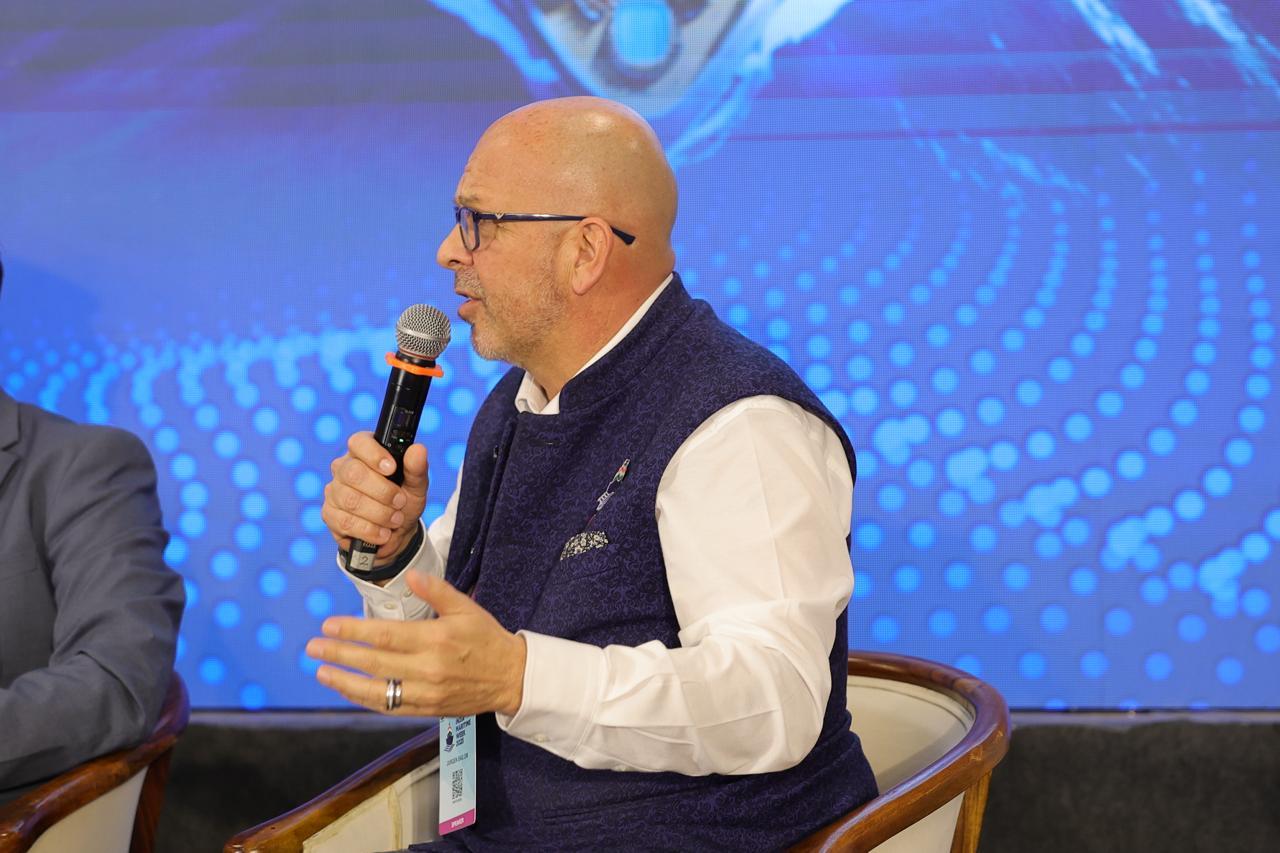
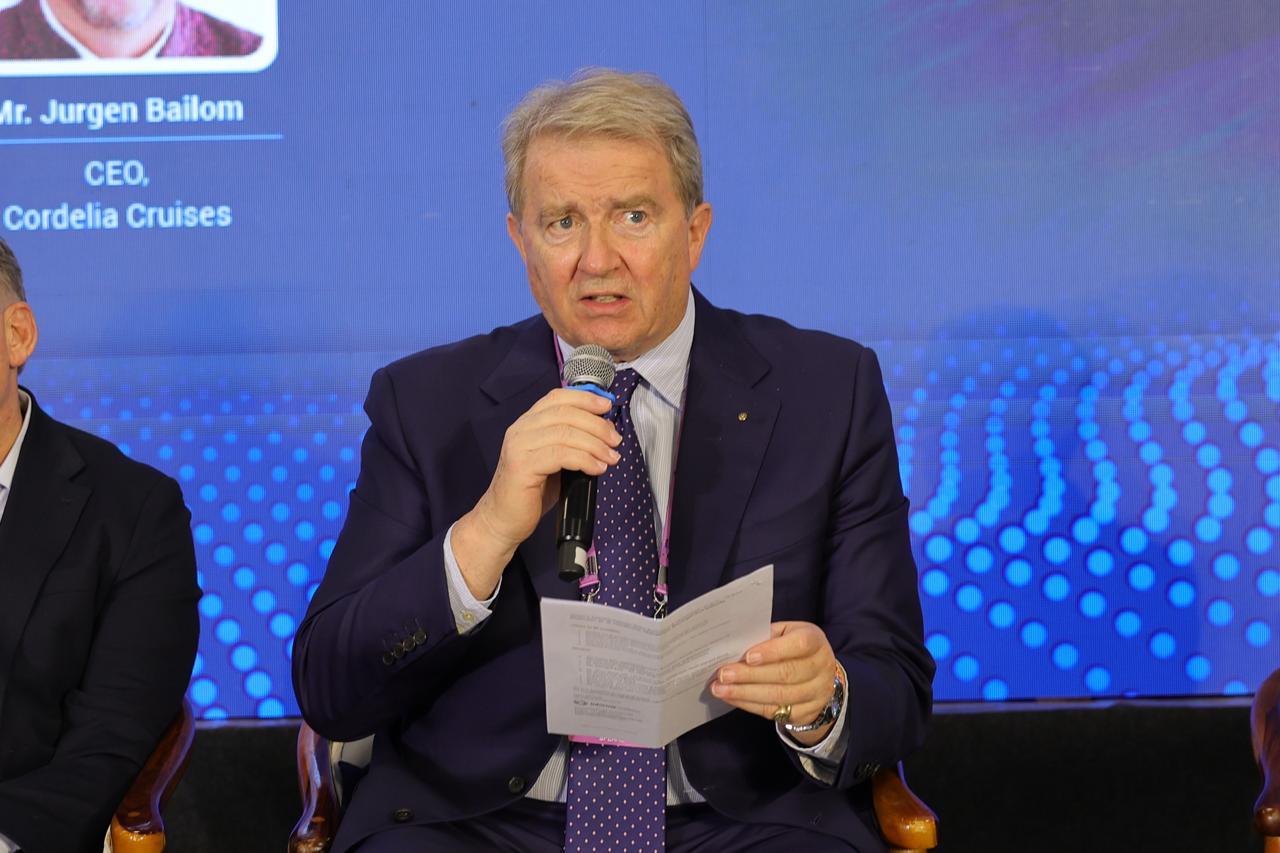
Cordelia’s Bailom reinforced that domestic success is crucial for attracting international players, drawing parallels with the EV industry where strong domestic players like Tata and Mahindra paved the way for Tesla's entry. With Indians showing strong appetite for cruising and government investments in terminals like Mumbai, the foundation is being laid.
The success formula laid out is clear: port infrastructure + commercial viability + domestic player success = global cruise destination, with customer choice ultimately driving the market once the foundation is solid.
The second Panel Discussion shed a spotlight on Passenger Experience, Sustainability & Policy Framework and was moderated by Dr. Venkata Ramana Akkaraju, Chairperson, New Mangalore Port Authority. Panelists included B Kasiviswanathan, Chairperson, Cochin Port Authority, Anoop Krishna, Joint Director, Bureau of Immigration, Shraddha Joshi Sharma, Commissioner of Customs, Stewart Inglis, Group Director, Maritime Policy & Government Affairs, MSC Cruises, Ingvar M. Mathisen, CEO & Port Director, Port of Oslo, Raj Singh, MD – Antara Cruises, Aashim Mongia, Director, M2M Ferries, Jasem Zaiton - Founder & Director- ZAITON FZ LLE, ZAITON Destinations Pv Ltd & Cruise ZAITON LLC.
Panelists in the session shared various ways in which the passenger experience and cruise tourism can be improved with ease of doing business and better customer experience.
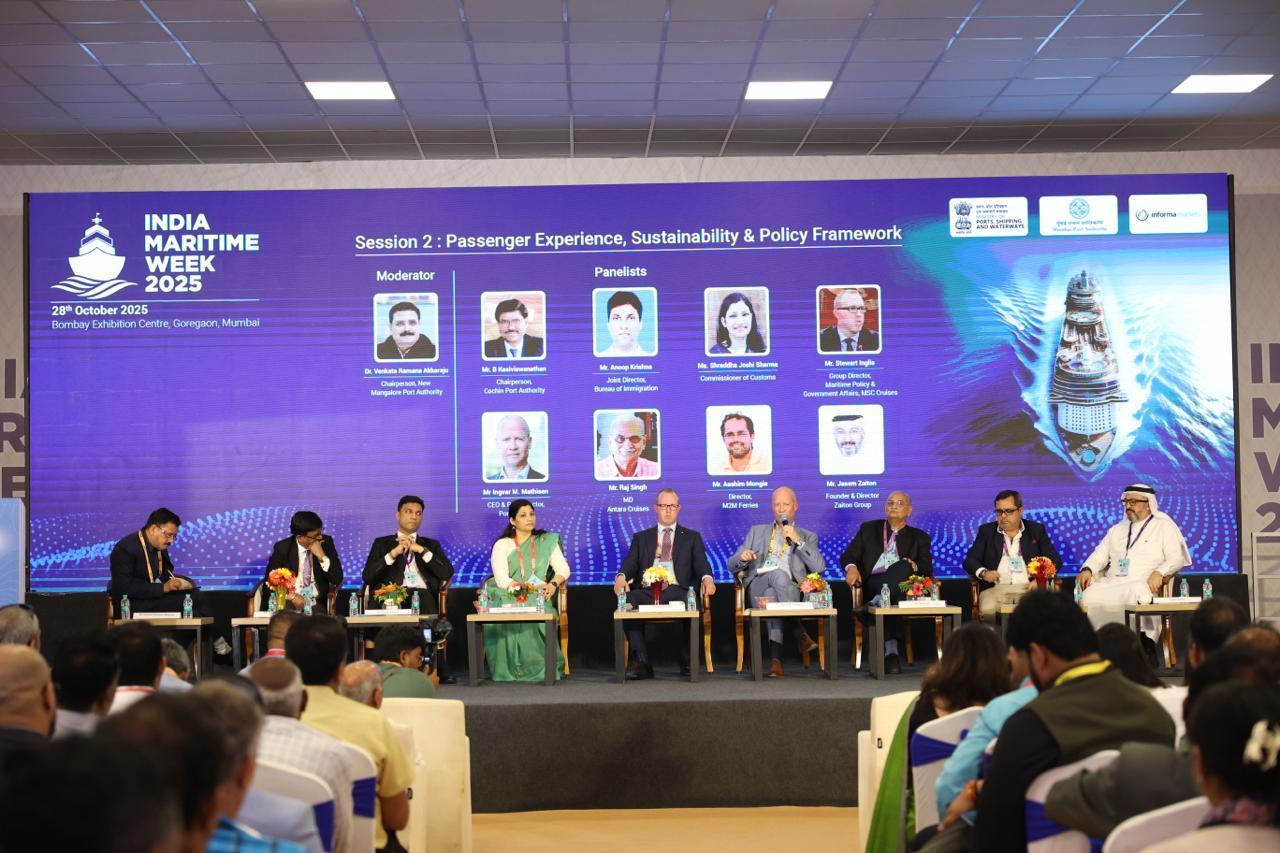
Talking about success stories, Cochin Port Chairman Kasiviswanathan shared about dedicated cruise terminals which have a comprehensive approach focusing on infrastructure, ease of doing business, and sustainability. The Cochin port, he said, has revolutionised passenger experience by sending teams directly to vessels for clearances and investing heavily in capacity building for all stakeholders - from travel agents to transport operators. By 2028, Cochin aims to become a classic home port facility with integrated digital infrastructure, targeting 2,000 passenger capacity with proper facilities and waiting areas. This holistic approach ensures passengers board with "trust and confidence" while showcasing India's rich culture and natural beauty.
Further, Krishna spoke on e-visa software which has transformed cruise operations with 95% of passengers now using QR code-based e-visas for entire ships. The dedicated software has significantly reduced turnaround times, with plans to implement FRS-based e-gate systems by mid-2026 after appealing to the Ministry of Home Affairs to eliminate disembarkation procedures.
Sharma from Customs highlighted remarkable progress with 40-50% reduction in turnaround time, successfully clearing 3,500 passengers in just 2.5 hours through single window clearance systems, demonstrating how digital transformation drives operational excellence.
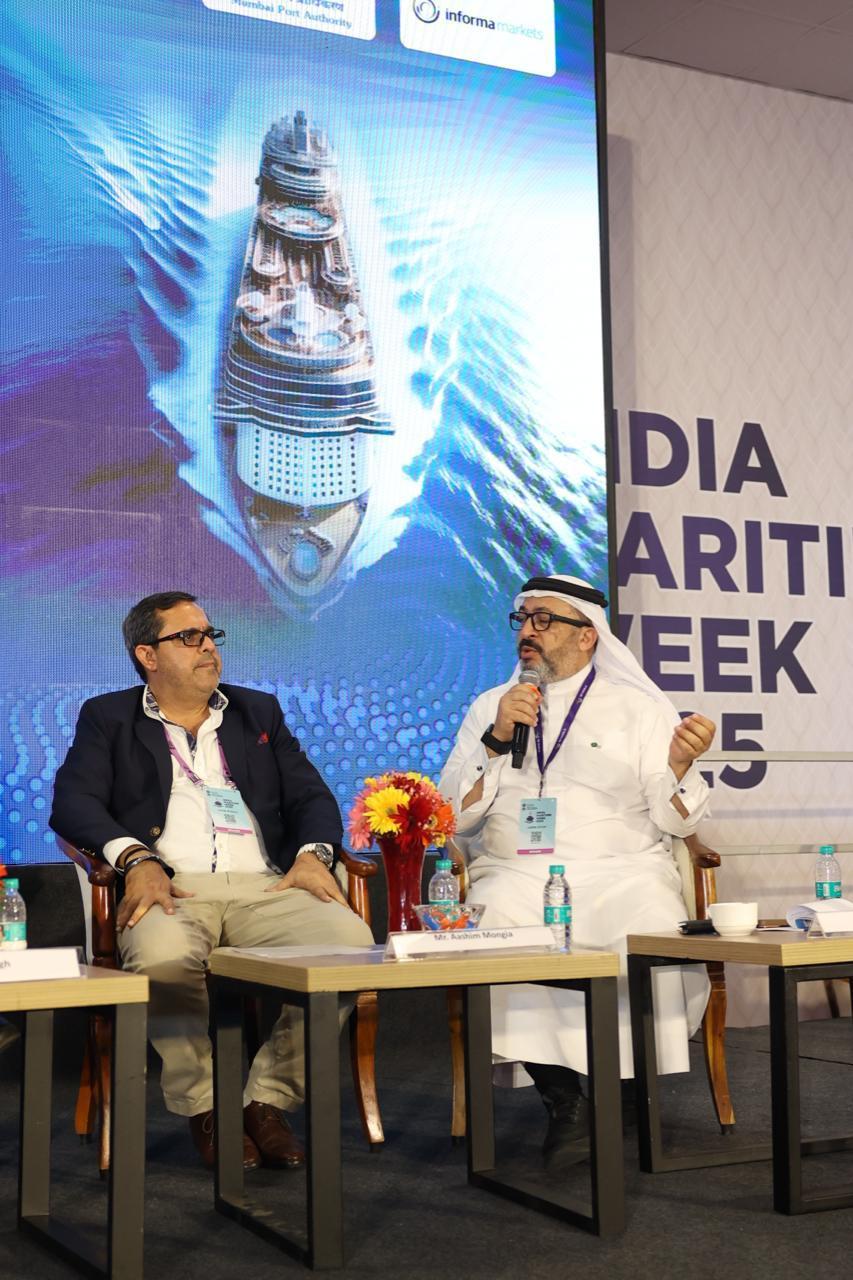
MSC Cruises (23 ships, 300 destinations across 100 countries) views India as a strategic destination, citing the vast coastline, diverse destinations, growing economy, and Cruise Bharat Mission alignment. However, Inglis, who represented MSC at the forum, emphasized the need for predictability and consistent policy frameworks across multiple states and union territories covering customs, immigration, taxation, and licensing. Norway's success model with 4.6 million people demonstrates collaboration potential, while sustainable practices including carbon footprint reduction and shore power capabilities are becoming crucial selection criteria.
Antara’s Founder, Singh mentioned that Maritime boards and state govts, inland waterways and the Cruise Bharat Mission should work together for coastal tourism and river tourism. Antara cruises with its single longest river cruise has many other plans and international companies like Vikings have come to partner with them. He mentioned, “Make our rivers as destinations. Each river, each day is different. Foreign companies will follow us.”
As highlighted by others including Jasem from Zaiton, India has potential to become a comprehensive cruise ecosystem, provided overregulation is addressed through single window systems and proactive policy approaches. India needs to be Cruise Simplified, said Jasem, making a powerful statement.
The summing up speech was given by Vipin Menoth, Traffic Manager, Mumbai Port Authority.