Azerbaijan renews India strategy, focuses on Quality over Quantity as arrivals dip 30%
 Florian Sengstschmid
Believes 2026 will be a year of consolidation, with the destination targeting 10-15% growth this year and the next, backed by an optimistic market response.
Azerbaijan had steadily emerged as a favourite short-haul destination for Indian travellers, driven by easy connectivity, visa facilitation and the growing appeal of Baku as a leisure and celebration hub. However, geopolitical developments affecting regional airspace and travel sentiment led to a temporary slowdown in arrivals from India, even as the destination continues to witness positive momentum from other global markets.
Weaving the India story
Speaking about the market dynamics, Florian Sengstschmid, CEO of the Azerbaijan Tourism Board (ATB), shares with T3, that the destination received 170,000 travellers from India last year, compared to 240,000 the year before, reflecting a decline of roughly 30%. Sengstschmid noted,“There was definitely less MICE and destination events. But at the same time, we saw more individual travellers coming to the country.”
Looking ahead, he believes 2026 will be a year of consolidation, with renewed focus on reviving the meetings and events segment. “The priority now is to see how we can bring MICE back and make Baku and the wider regions attractive again for corporate events and destination celebrations, whether weddings, birthdays or social gatherings,” he says.
Sengstschmid adds that Indian travel to Azerbaijan has traditionally been heavily concentrated around Baku. “One of our key goals is to make the regions more known and more attractive for Indian travellers, because the focus has been very much on the capital.”
Despite the slowdown from South Asia, the broader tourism outlook remains positive. “Overall, most markets have been increasing. The only decline we saw was in South Asia. Markets such as neighbouring countries, Russia, Turkey, Europe and the Far East Asia have shown very positive development,” he says.
He emphasises that the destination’s appeal remains strong across international markets. “The overall dynamic for Baku and Azerbaijan is still very positive. It is also important to communicate clearly that Azerbaijan remains a safe and welcoming destination, and nothing has ever happened to disrupt travellers’ experiences.”
According to Sengstschmid, travellers themselves have played a role in maintaining positive sentiment. “There has never been any kind of incident, only positive experiences. Many Indian travellers who visited shared on social media how beautiful the country is and how welcoming the people are.”
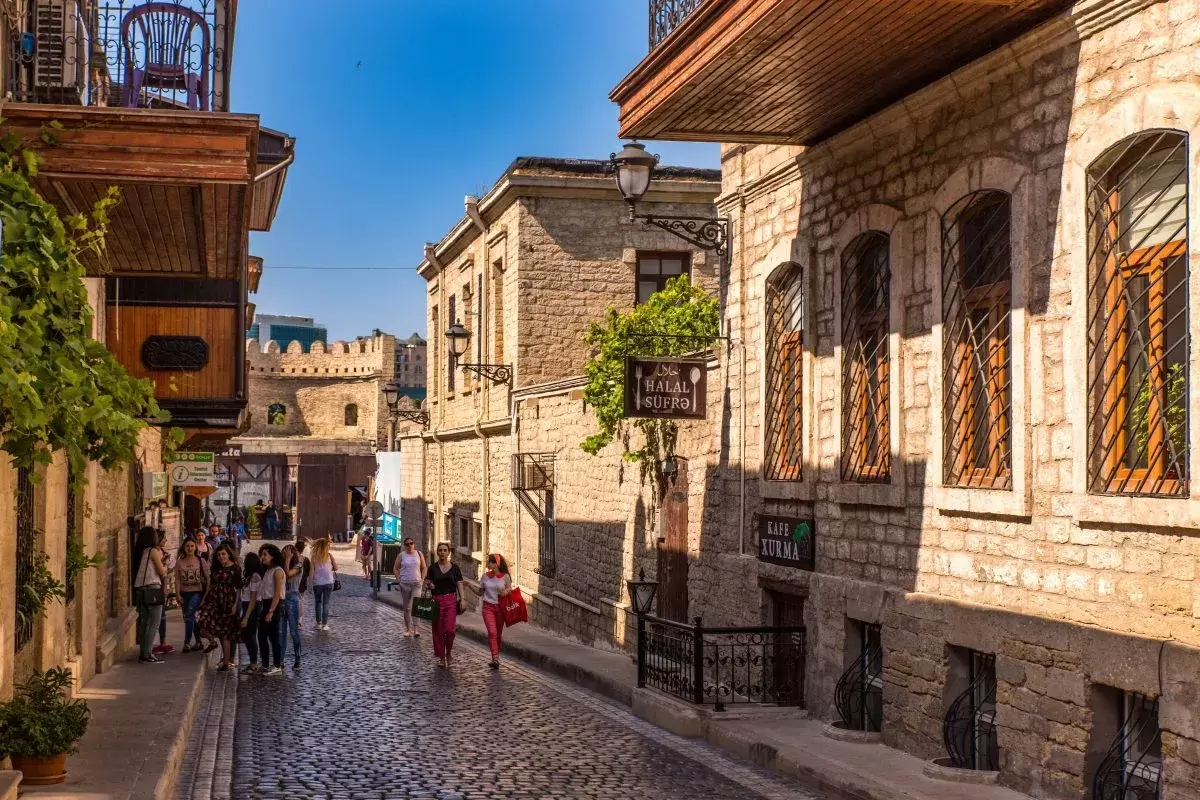
To maintain engagement with the Indian market, the tourism board continues to strengthen its presence through on-ground activations. “Over the past few years we have been present in almost every major city in India through different activations,” Sengstschmid shares. “This year we are focusing on Chennai, Delhi and Ahmedabad, especially with the launch of flights from Ahmedabad. It was originally planned for last year, so we are pleased it is finally happening this year.”
Response from trade
He also highlighted the encouraging response from the Indian travel trade. “The trade response has been very positive because, ultimately, it all comes down to human connection. Despite the discussions around geopolitics, there has always been a continuous embrace and welcome for Indian travellers to Azerbaijan,” he says.
“Our partner knows what really works well,” notes Sengstschmid. Beyond the capital, Azerbaijan is also expanding its tourism offerings to encourage deeper exploration. “Baku is a self-seller, but what we believe will resonate strongly is showcasing more immersive experiences across the regions,” Sengstschmid explains.
These include gastro-culinary routes, wine experiences, craftsmanship workshops and nature-based activities that combine culture with the country’s landscapes. “We have experiences suited for almost every type of traveller. What is up to us, from a tourism board perspective, is to bring more of these unique elements where you can immerse.” he says.
If geopolitical conditions stabilise, ATB expects the market to rebound gradually. “If the regional situation improves and all work in place, we anticipate growth of around 10-15% this year, followed by another 10-15% next year,” he says.
Strategy Shift
A notable development in 2025 was the rise of independent travel to the destination. “These smaller groups of friends, solo travellers and niche segments such as hiking or birding, have been growing steadily,” Sengstschmid notes. “This is something we want to sustain and expand across different segments, not only luxury, but also nature, life events and other specialised travel experiences.”
At the same time, he reiterated the importance of the MICE segment for the destination. “From an economic perspective, MICE remains a very important pillar. India, in the broader global scope, is one of the most significant MICE markets,” he says.
The tourism board is now shifting its focus from sheer arrival numbers to deeper visitor engagement. “It is not just about the number of arrivals. What matters equally is extending the length of stay,” Sengstschmid concludes. “We would like travellers to explore the regions and spend one or two additional nights there. Numbers are important, but the real value lies in how visitors experience the destination and immerse themselves in it.”