Hospitality rooted in culture, crafted by legacy: Inside Norbu Ghang’s vision for Sikkim Tourism
 Norbu Ghang Pangthang_facade
At a time when hill destinations across India are increasingly seeing homogenised hotel developments, Sikkim-based Norbu Ghang, a family-run hospitality brand, is consciously charting a different path: one that prioritises authenticity, cultural immersion and a strong sense of place. A conversation with Dekye Lhamu Bhutia, Director of Norbu Ghang Hotels.
In the quiet hills of Sikkim, where the first rays of sunlight strike the Kanchenjunga, a distinct hospitality philosophy is already taking shape in Sikkim, one that is deeply personal, culturally immersive and rooted in family legacy. At the heart of this narrative is the Norbu Ghang hotel & resorts chain, whose family-run hospitality brand has evolved over three decades while staying true to its core ethos: offering guests an authentic, unfiltered experience of Sikkim.

“From our modest beginning nearly 35 years ago to a growing portfolio of boutique luxury properties across Pelling and Gangtok, Norbu Ghang today stands as one of Sikkim’s few owner-driven hospitality brands—where every detail, from architecture to cuisine, reflects the region’s soul,” said Dekye Lhamu Bhutia, Director of Norbu Ghang Hotels, while speaking with T3. She passionately advocates for owner-operated hotels that celebrate local heritage, foster community engagement and preserve authenticity, asserting that these are the true custodians of Sikkim’s tourism identity.
The story of Norbu Ghang is inseparable from Lhamu’s father as well, whose background in construction laid the foundation—quite literally—for the brand. “He always believed that people coming to our part of the world should see the mountains… and experience space, comfort, and nature without compromise. Without formal architectural training, his instinctive understanding of guest preferences shaped properties that prioritise views, spaciousness, and emotional connection with the landscape,” she said, adding that this very philosophy continues to define the brand’s DNA.
Today, the group operates: Two properties in Pelling (including a spa retreat, ~63 rooms), and a newly launched 38-key property in Pangthang, one where Travel Trends Today was also hosted during the Ministry of Tourism’s engagement in November 2025.
Not just another hill hotel
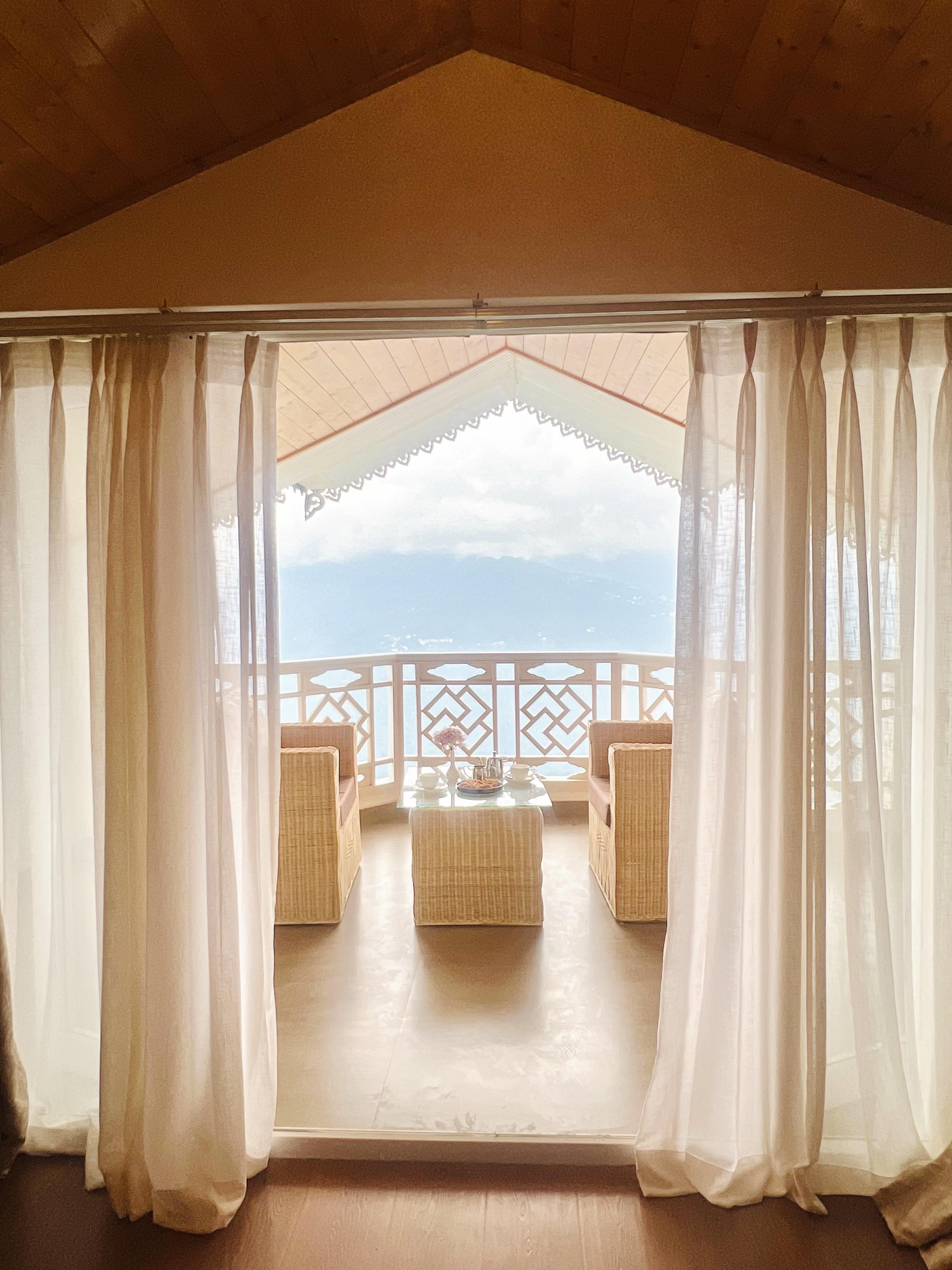
Nestled away from the lively pulse of Gangtok, Norbu Ghang Retreat Pangthang, is thoughtfully designed with cultural authenticity, and a genuine Sikkimese experience. Instead of expanding the property with additional guest rooms, the owners chose to prioritise quality over quantity, ensuring that every room offers a breathtaking view of the Mt. Kanchenjunga, including the dining spaces. All 38 rooms and cottages are meticulously designed to provide uninterrupted vistas of the mountain, a vision carefully upheld by Lhamu’s father during the hotel's planning and design process. The hotel is equipped with a spa, a convention hall and a gym in the pipeline.
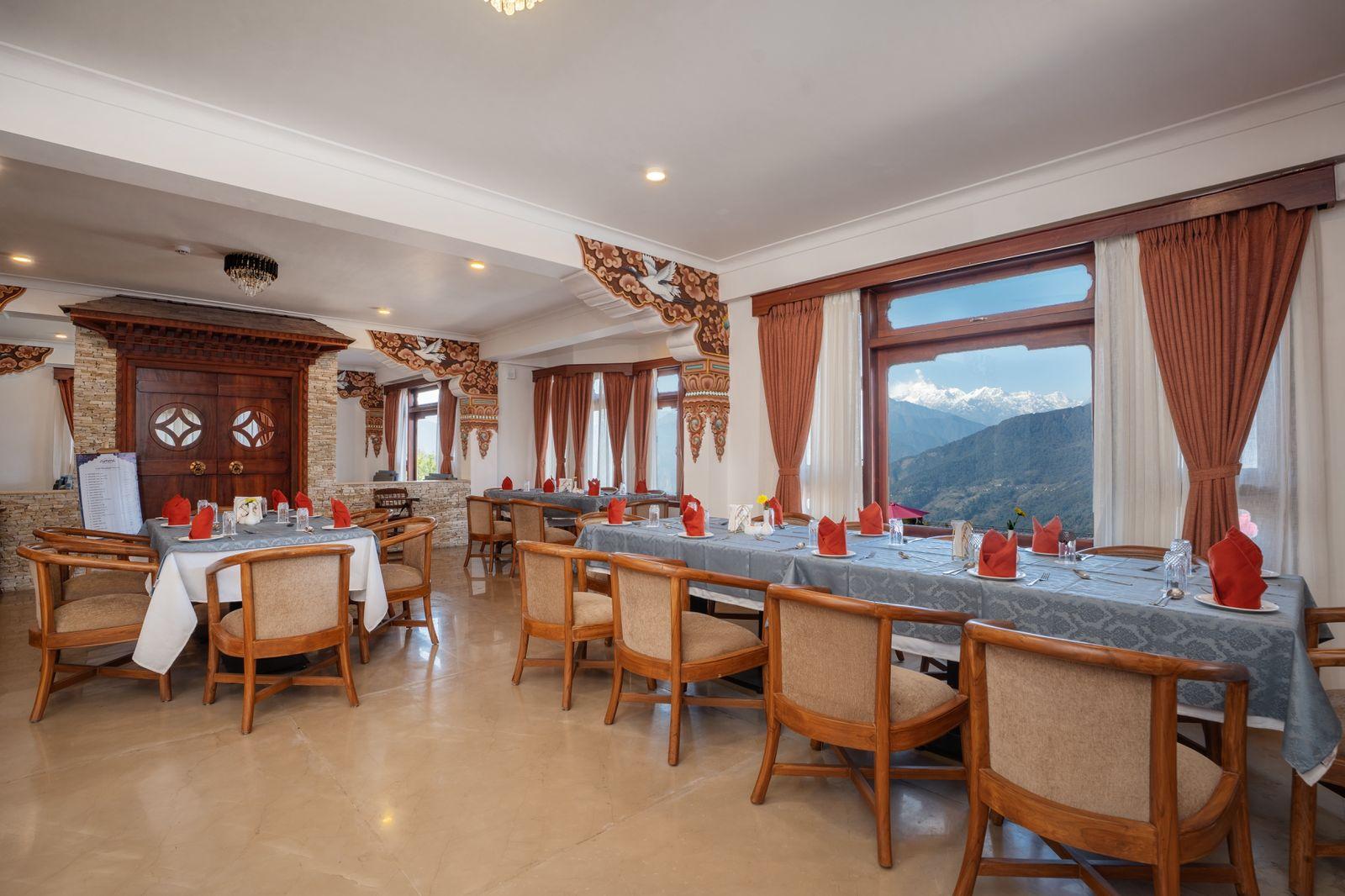
What truly sets this property apart is its refusal to become “just another hill hotel.” From intricately carved wooden pillars to Buddhist-inspired motifs, and even a Sikkimese speciality restaurant designed like a traditional altar room, the experience is immersive and intentional. “When you check into Norbu Ghang, you are seeing Sikkim—the Bhutia culture, the carvings, the furniture… everything rooted in who we are,” she shared.
The brand’s three core strengths as put in a nutshell by Lhamu were: Uncompromised Kanchenjunga views, exceptionally spacious rooms—even with extra beds and owner-led hospitality ensuring personal attention and consistency.
In Pelling as well, years of ecological planning have translated into a living landscape experience for guests. “Today, when guests check in, they see rhododendrons, cherry blossoms, peach and plum trees in bloom. The property also integrates in-house kiwi cultivation, home-grown herbs used in culinary offerings. This long-term approach to landscaping reflects a slow, sustainable development philosophy.”
Sikkim needs better awareness, stronger audience connections
Drawing from her years of experience, Lhamu highlights a noticeable shift in Sikkim’s tourism dynamics. “Earlier, foreign travellers were equally, if not more, in number… now domestic tourism dominates, while international footfall has declined.”
She attributes part of this change to the growing influence of social media narratives, which can sometimes distort perceptions of destinations. “Sometimes, situations are blown out of proportion online… and that affects destinations like ours that depend heavily on tourism.”
Looking at the government figures, Sikkim’s tourism sector demonstrated remarkable resilience and recovery following the pandemic slump. Domestic tourist arrivals climbed from 3,16,408 in 2020 to 5,11,489 in 2021, surging to an impressive 16,25,573 in 2022. Although there was a slight dip to 13,21,169 in 2023, the numbers rebounded to 15,40,421 in 2024, with 12,18,372 visitors already recorded by October 2025. Similarly, foreign tourist arrivals have shown a strong upward trajectory, rising from 19,935 in 2020 to 68,645 in 2022, peaking at 93,908 in 2023, and settling at 84,820 in 2024, with 46,591 travellers logged by September 2025.
Adding to this, Lhamu, who has done her formal training from IHM Pusa and has experience with Taj Hotels, brings both professional expertise and local insight to the table. Yet, she is clear-eyed about the challenges when asked. “Product-wise, Sikkim is not lacking at all. What we need is better awareness and stronger connections with the right audiences.”
Focus on deepening the experience
While expansion opportunities exist, the group remains focused on strengthening its presence within Sikkim rather than scaling outward. Bhutia shared that the immediate focus is on deepening the experience rather than widening the footprint.
“We want guests to come to Sikkim and feel Sikkim—not stay in a hotel that could be anywhere else. The future lies in promoting offbeat, non-commercialised experiences, collaborating with local youth-led travel initiatives and offering village tours, hikes, and immersive itineraries. There are many experiences in Sikkim that are still untouched… and those are the ones we want to bring to our guests,” she added.