40th IATO Convention opens in Puri with a call for policy support, stronger inbound push
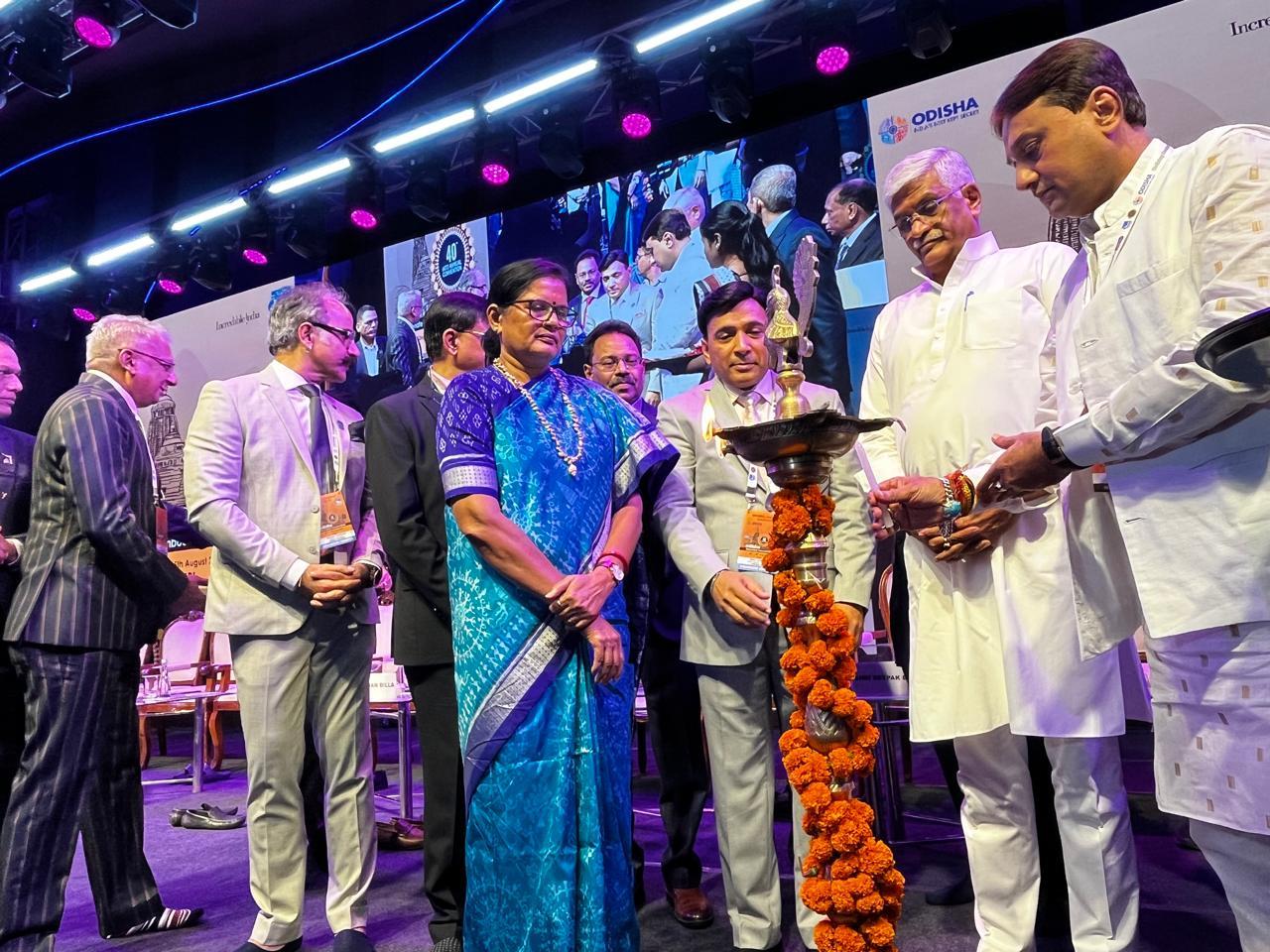
 Representative Image_From IATO Convention Inaugural session-1
The next edition of IATO Convention (2026) to be hosted in Vishakhapatnam, Andhra Pradesh.
The 40th Annual Convention of the Indian Association of Tour Operators (IATO) opened with a grand inauguration in Puri’s Swosti Resort on August 22 with industry leaders, govt. officials and policymakers underlining the urgent need for policy reforms, investment-friendly clearances, and a renewed focus on inbound tourism.
The event was officially inaugurated by Gajendra Singh Shekhawat, Union Minister of Culture and Tourism, Govt. of India, Pravati Parida, Dy. Chief Minister, Govt. of Odisha, Suman Billa, IAS – Additional Secretary & DG (Tourism), Ministry of Tourism, Govt. of India, in the presence of other state officials and IATO leadership team.
Gajendra Singh Shekhawat, Union Tourism & Culture Minister during his address said, “India’s identity as an inbound destination is growing stronger than ever before. And I say this with full responsibility, the way India’s scenario is changing, the way economic prosperity is increasing, I clearly see a golden future for inbound tourism in India. As the Prime Minister always says, India’s diversity gives us a unique identity in the world, but what makes us stand apart is the sense of hospitality that is in the DNA of every Indian. That makes us different and stronger.”
The Government of India, he said, is supporting states in this journey — by investing in infrastructure, creating strategies, and providing direction. “We are not only working on airports and connectivity but also on uplifting the tourist experience. We are also focusing on human resource development. By signing MoUs with hotel management institutes and major hotel chains, we are upgrading education standards so that skilled manpower can serve this industry. And today I proudly say, India has started e-Visa facilities for almost the entire world. From any category, they can apply online and get access to India,” adding that with the consistent efforts of the industry and govt, Indian tourism sector could easily reach its 2047 goals, contributing almost 10% to national GDP.
Even though outbound from India is doing quite well, he also stressed on how joint efforts need to be pushed for bringing in more inbound tourists, especially at a time where the currently imposed tariff structures by other major markets can work well in favour for India.
Lauding IATO for the convention, the minister said, “By bringing together all stakeholders of the sector, you have organized such conventions, which become a common platform for ideas. The IATO platform, where every year we all come together, has been the most important stage for India’s tourism industry for decades. Here we discuss, make plans, and decide the direction for the coming year. This platform is not only important for the tourism sector but also for governments of the country and the states, for officers and policy planners working in tourism — because the voice that rises from here acts as a guide for them as well.”
He acknowledged how IATO, with more than 2000 members, emerged as the strong voice of Indian tourism.
Government & industry have one purpose—to make tourism deliver for India
Bringing the policy perspective, Suman Billa, Additional Secretary and Director General, Ministry of Tourism, highlighted the structural challenges facing India’s inbound sector. “Our domestic demand has increased significantly, and business inbound has picked up. But leisure inbound has been shrinking over the past several years, and that is a source of great concern,” he said.
Billa flagged the growing imbalance between India’s inbound and outbound flows: “We send out about 27–28 million people, while receiving only about 20 million. Inbound generates less than INR 3 lakh crore in foreign exchange, while outbound spends are almost catching up—and rising faster.”
He cautioned that complacency could hurt India’s competitiveness: “It is very easy to walk out of the inbound market, but ten times harder to re-enter. We need to get over smugness, work strategically, and reinvent ourselves in a market that is becoming increasingly commoditised.”
Calling for stronger collaboration, he said, “Government and industry are not separate. All of us have one purpose—to make tourism deliver for India. Tourism is one sector where jobs are created locally, and earnings are immune to tariffs. If we want resilience in the economy, we must make tourism an engine of growth.”
While giving the welcome address, Sanjay Razdan, Vice President & Chairman Convention added a forward-looking perspective, urging stakeholders to embrace the theme Rejuvenate Inbound @ 2030 as a movement. “United by a clear and ambitious vision, it signifies India's steadfast commitment to rebuild and transform inbound tourism through innovation and resilience. By 2030, our goal is to offer immersive, high-value experiences that blend timeless traditions with modern aspirations, attracting not just more visitors but quality travellers. This is about sustainable, inclusive growth that empowers communities and safeguards our heritage,” he said. Razdan noted that the convention’s business sessions, the Indian Tourism Fair, and post-convention tours would shape a forward-looking framework that meets today’s demands and charts the path ahead.
In his first presidential address, IATO President Ravi Gosain said the theme ‘Rejuvenate Inbound @ 2030’ reflects the industry’s collective vision to revive and grow India’s inbound tourism over the next five years. He credited Prime Minister Narendra Modi’s push for heritage and spiritual tourism for giving India “a new positioning as a global spiritual hub,” while also lauding Odisha’s efforts in policy and infrastructure.
“Odisha has been a front-runner in eco-tourism, responsible tourism, connectivity and policy innovations. We are showcasing this through eight exclusive post-convention tours, with 250 delegates exploring the state’s best-kept secrets,” Gosain said. He also stressed the need for “continued policy support across key ministries” to accelerate inbound arrivals, diversify markets, and build last-mile connectivity.
Odisha gearing up with new developments; targets 5 crore tourists
“Odisha is no longer just a pilgrimage destination. It is evolving into a complete tourism experience. Our state is committed to making tourism a major pillar of its economy. Our target is 5 crores domestic and 7 lakh foreign tourists' annually arriving here,” said Pravati Parida, Dy. Chief Minister, Govt. of Odisha, speaking further about Odisha’s readiness to scale up both capacity and experiences, aiming to build capacity for 25,000 rooms in the state.
The Dy CM stressed Odisha’s focus on cultural and heritage tourism, announcing plans to develop 15 master destinations. “We invite the entire travel fraternity to partner with us to create memorable experiences, to tell stories that inspire and connect, and to take Odisha globally as one destination,” she said. Backing this vision, Odisha signed three MoUs, aiming to strengthen adventure, spiritual and cultural tourism while preserving the heritage.
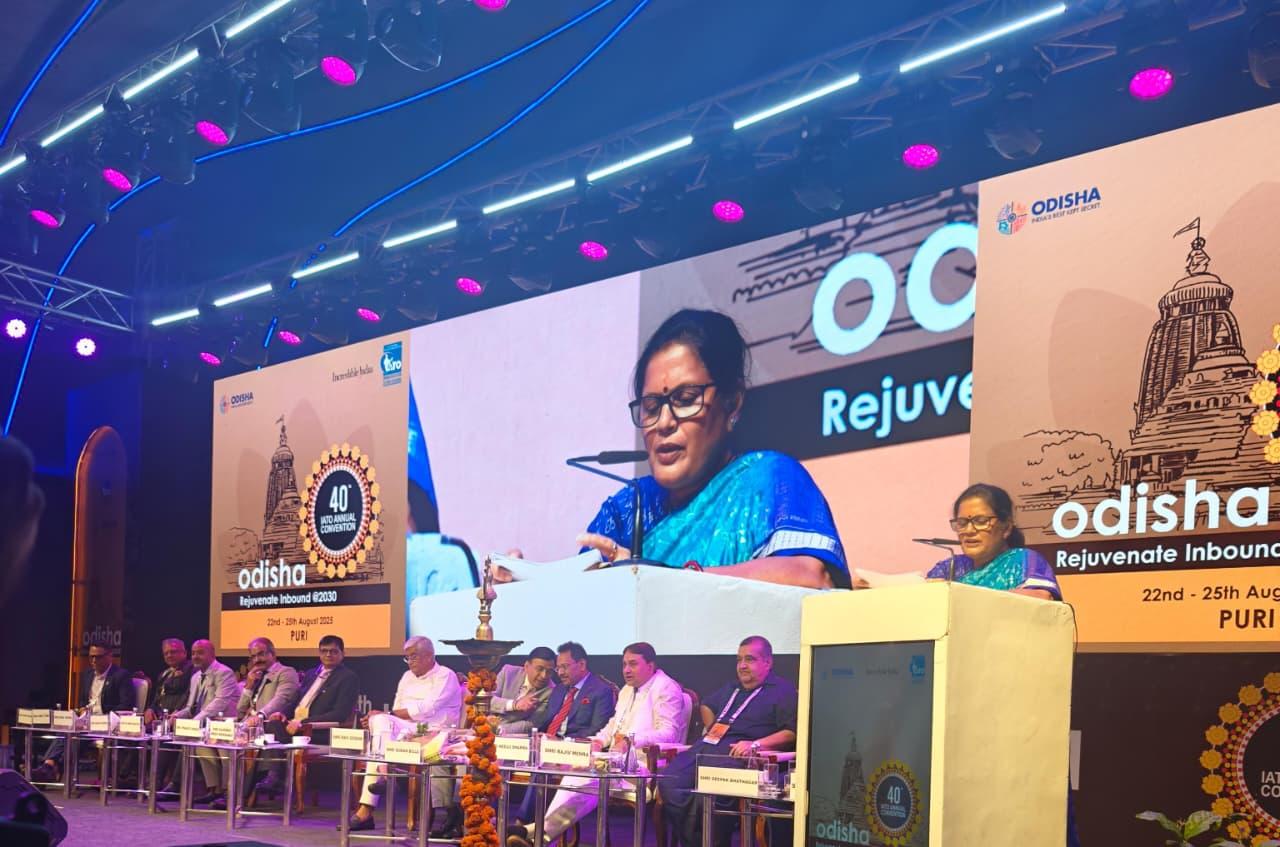
Infrastructure development is central to Odisha’s strategy. The Dy CM pointed to new and coming projects in Puri, the expansion of Bhubaneswar airport, and plans for a new airport in Puri. “Eco-located festivals, luxury glamping, policy support for homestays, and MICE tourism are all part of our vision,” she added.
Calling for deeper collaboration, Parida urged tour operators to help Odisha unlock its untapped potential. “Take Odisha to the world, bring the world here. Partner with us to curate new circuits. Help us reach international markets and empower local communities so they become stakeholders in the tourism value chain.”
Balwant Singh, IAS – Commissioner cum Secretary (Tourism), Govt. of Odisha highlighted state’s evolving tourism infrastructure, acknowledging the supply-demand gap but emphasising strong progress. He shared about Odisha hosting the highest number of indigenous aboriginal communities compared to other states, enriching its cultural fabric.
On the coastal tourism front, the state already has two Blue Flag beaches (Puri and Sonapur) and aims to develop 10 more in the next two years. The state also promotes its rich wetland ecosystem. Major attractions include Chilika Lake, Hirakud Dam (largest earthen dam), and national waterways, which present opportunities for river cruises, backwater tourism, and waterline voyages.
“Odisha has also developed world-class sports infrastructure, successfully hosting events like the Hockey World Cup (twice) and international football tournaments. The state is also positioning itself strongly for MICE and concert tourism, backed by growing infrastructure,” he added. Singh stressed that while challenges remain, Odisha is steadily strengthening its tourism ecosystem.
J.K. Mohanty, Chairman – IATO Eastern Region, described the Odisha's convention as “a matter of pride, not only for IATO, but for the Odisha chapter and the eastern region,” adding that Odisha now needs “a more aggressive marketing campaign showcasing itself as a year-round destination.” Mohanty pointed out that while the state is rich in resources—beaches, temples, mountains, and Chilika, the country’s largest lake—development is hampered by bureaucratic hurdles. “All the prime areas of Odisha, whether it is Bhitarkanika or Similipal, are declared forest land. Tourism is the only industry that is harmless and free of pollution, yet we are not able to develop infrastructure due to forest and CRZ clearances,” he said. Mohanty urged the Centre’s intervention: “To build a hotel, we need 32 clearances. Projects are delayed for years. We need the Union Tourism Minister’s support to fast-track permissions so that Odisha can add at least 5,000 rooms in the next 2–3 years.”
Highlighting Odisha’s unique position, he added, “Puri is a combination of Goa and Tirupati. Odisha has everything—heritage, beaches, wildlife. What we need is the political willpower to unlock tourism and create jobs for people in tribal and forest areas.”
Next (41st Edition) Convention goes to Andhra
The inaugural session also saw Ajay Jain, IAS – Spl. Chief Secretary (Tourism), Govt. of Andhra Pradesh, making a special announcement, an invitation to delegates for the next annual convention in Visakhapatnam. “The 41st IATO Convention will be held in the city of Visakhapatnam, in August-September 2026,” he announced.
Urging IATO and its members to become ambassadors for Andhra Pradesh tourism, Jain added, “We invite you to enjoy the traditional Andhra hospitality and showcase Andhra Pradesh as a vibrant tourism destination in the coming year.”
As the curtains lifted on the three-day convention, the mood was both celebratory and urgent. At the end, the mementoes to the officials were presented by Rajnish Kaistha, Sr. Vice President, IATO followed by a launch of IATO’s Annual Manual and networking dinner, music night. Hall of Fame was presented to Pronab Sarkar, Past President, IATO & Founder (Swagatam Tours) for his immense contribution to both IATO & the industry.
The convention continues today, with multiple sessions and business-to-business meetings. The following day will also see the usual Run for Responsible Tourism taking place.