‘Mega’ India’s tourism growth playbook, data-driven roadmap decoded at PATA PowerHouse 2026
 Representative Image_PATA India event
The forum, organised in New Delhi, featured in-depth discussions that helped states and the industry stakeholders understand global best practices and re-examine their own strategies with a fresh, forward-looking perspective.
The fourth edition of the PATA India Tourism PowerHouse 2026 gathered representatives from 12 Indian states and industry associations at Taj Palace, New Delhi, to gain actionable insights on building global competitiveness. Hosted by the PATA India Chapter under the theme ‘Accelerating Tourism For Tomorrow’ Powered by Data and Knowledge, the forum featured in-depth discussions that helped states and the industry stakeholders understand global best practices and re-examine their own strategies with a fresh, forward-looking perspective.
Setting the tone, Vikram Madhok, Vice Chairman PATA India, highlighted India’s strong inbound recovery, noting that international arrivals have largely returned to pre-pandemic levels, driven by markets such as the US, UK, Australia and Asia Pacific. He shared that India recorded over 20 million international arrivals in 2024, generating USD 35 billion in foreign exchange and supporting 84 million jobs, while stressing that aviation expansion and new airports remain critical to sustaining momentum.
All about how well we manage the destinations
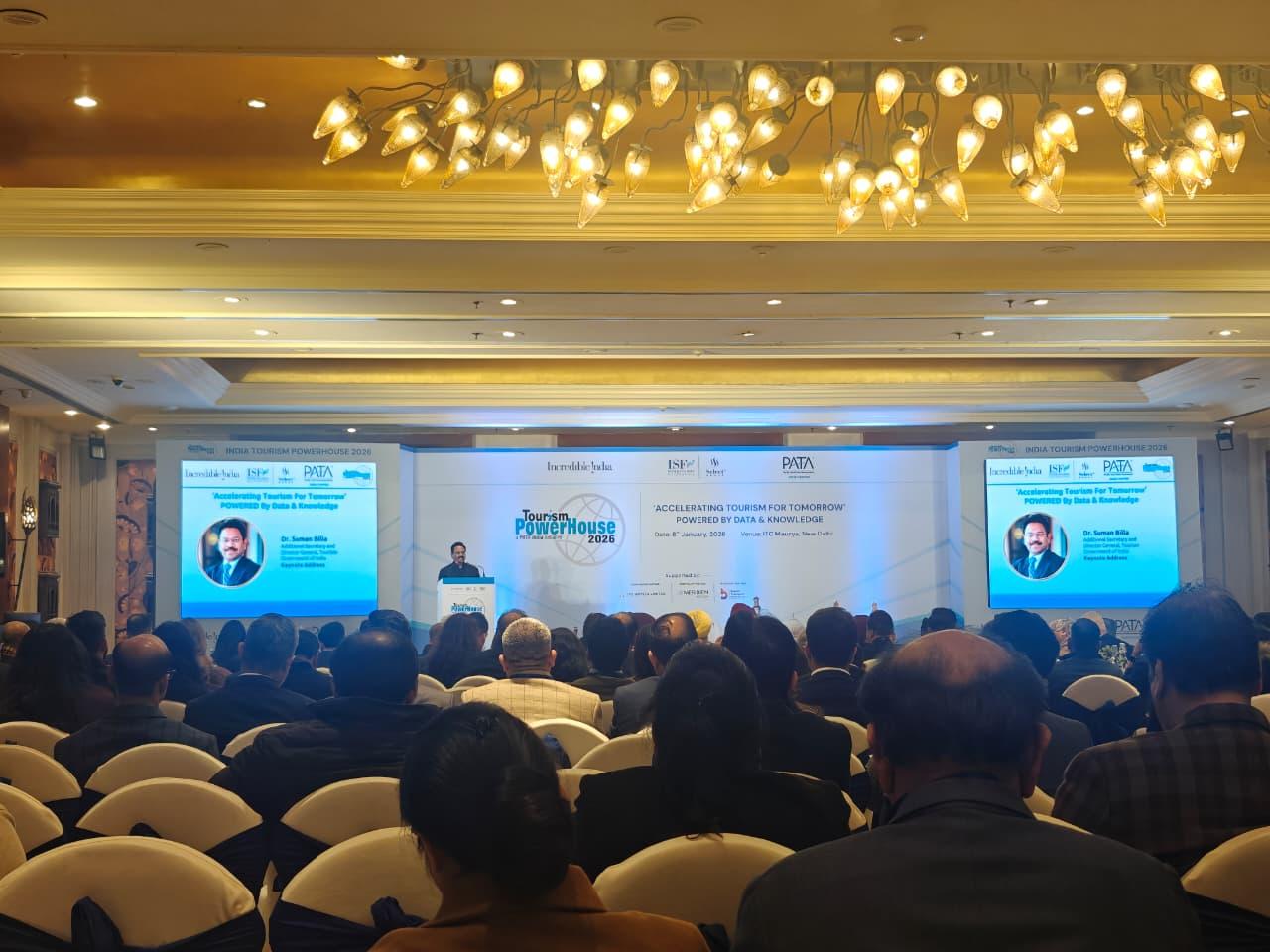
Addressing delegates at the PATA Tourism Powerhouse, Suman Billa, AS & DG, Ministry of Tourism, Govt of India said the country stands at the beginning of a long-term tourism growth cycle but warned that growth will not automatically translate into impact unless the sector fixes deep structural gaps.
Billa noted how the country has remained the world’s fastest-growing large economy for over a decade. He highlighted the scale of infrastructure expansion, with airports doubling from 75 to nearly 150, a planned addition of around 1,000 aircraft to the existing fleet, rapid highway expansion, and Vande Bharat trains transforming rail travel. Combined with rising incomes, this has triggered an unprecedented surge in domestic travel demand.
However, he pointed out that tourism has failed to fully capitalise on this momentum. Despite strong domestic and international demand, tourism contributes only about 5.5 per cent to India’s GDP, nearly half the global average. Citing the Prime Minister’s call to double tourism’s GDP contribution to 10 per cent, Billa said the challenge is not demand but institutional and policy readiness.
“The conversion is not happening. We are not leveraging demand and infrastructure to make tourism as large and vibrant as it should be,” he said, calling for a relook at how India measures success. Instead of focusing only on footfalls, he urged the sector to prioritise yield per tourist, framing growth within a responsible and resilient paradigm. “Growth is a given for India. The real challenge is to shape that growth responsibly and with resilience,” he cautioned, citing disruptions like COVID as reminders of the sector’s vulnerability.
Calling tourism India’s “missing growth multiplier”, he stressed that it remains one of the most underleveraged sectors for employment generation and foreign exchange earnings. He said the government’s role should be to create enabling policy frameworks, while entrepreneurs must be allowed to scale without friction.
Billa underlined the need to move decisively from marketing-led growth to destination management, arguing that future competitiveness will depend on how well India manages destinations rather than how loudly it promotes them. He called for professionally run Destination Management Organisations (DMOs) to integrate infrastructure, sustainability, community participation, market intelligence and big data, enabling year-round tourism and better yield per visitor.
He also urged the industry to prepare for a new global traveller who is digitally native, experience-driven, sustainability-conscious and value-focused. “Personalised experiences at scale, supported by technology and artificial intelligence, will be critical. Also, Responsible tourism should become India’s default approach if the country wants to outperform global competitors,” he said.
On MICE tourism, Billa linked it directly to urban competitiveness, calling for institutionalised convention bureaus and city-led positioning of global convention hubs such as Delhi and Hyderabad, rather than a purely national pitch.
Billa also emphasised the importance of partnership-led growth, noting that institutions like PATA play a critical role as the connective tissue between government and industry through standards, knowledge-sharing and global linkages.
Summing up, he said, “The next decade for India will not be defined by how many tourists we get, but by what kind of destinations and experiences we are able to create.”
Speaking at the same event, S. Harikishore, Joint Secretary, Ministry of Tourism, also said that India needs to accelerate rather than just push, highlighting the G20’s success in demonstrating India’s capability for both large and small events across diverse locations. “There are lots of low hanging fruits. We could do large meetings… smaller locations. It’s not necessary that we must only look at New Delhi or Hyderabad,” he noted, calling for city bureau strategies and public-private collaboration to capture accessible opportunities.
Sustaining the ‘Mega India’ growth
Calling India one of the most powerful tourism stories of the coming decades, Noor Ahmad Hamid, Chief Executive Officer of the Pacific Asia Travel Association, urged policymakers and industry leaders to pause and ask a critical question: “Is India ready to turn tourism demand into sustainable growth for local businesses and communities?”
Hamid said India is no longer viewed as just a destination but as “a collection of experiences”. However, he cautioned that the challenge now lies in moving beyond the powerful Incredible India imagery to translating scale into value.
Highlighting India’s demographic and economic heft, Hamid said scale defines “Mega India”. With Gen Z accounting for nearly a third of the population, he described young Indians as digitally native, confident consumers who will rapidly fuel domestic tourism while also shaping global perceptions of India as a source market.
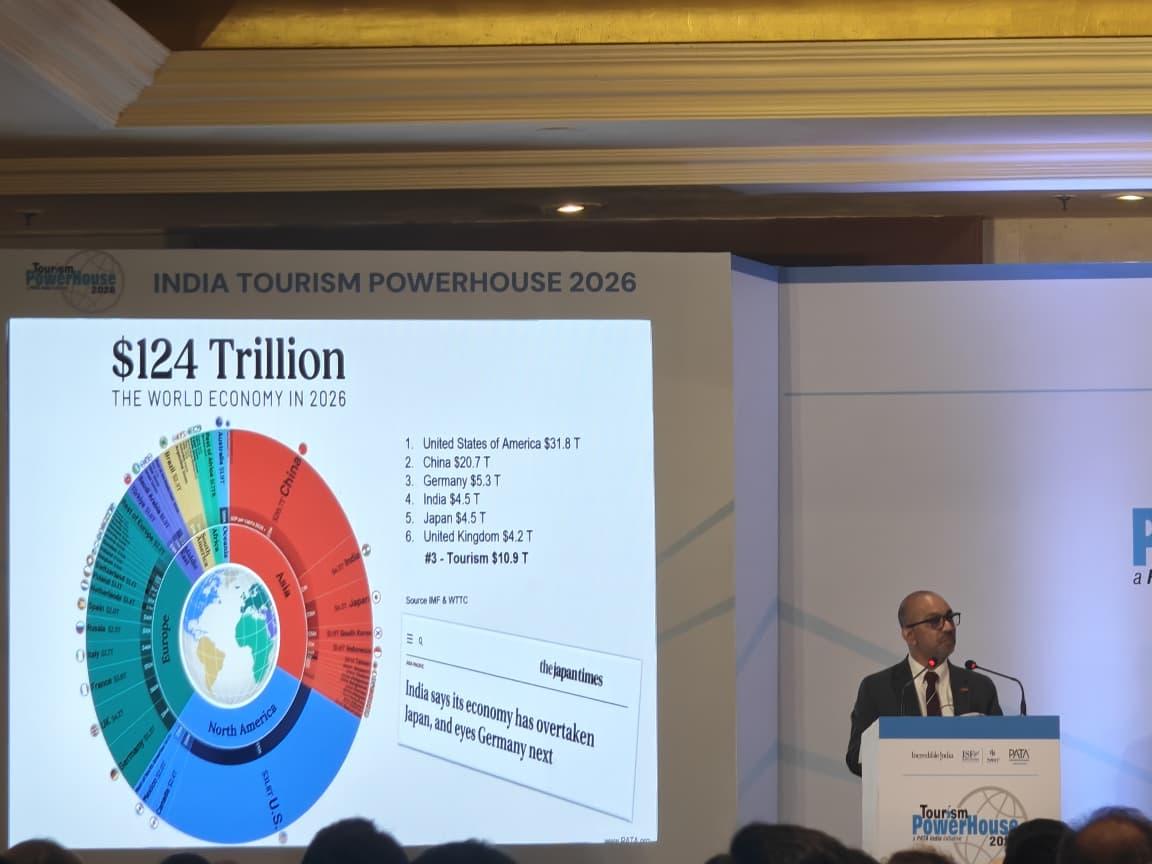
Backing his argument with global context, Hamid noted that if tourism were treated as an economy, it would rank as the world’s third largest after the US and China. Asia-Pacific, he said, is emerging as the global growth engine, driven by what he termed the “CIA of growth”—China, India and ASEAN—where momentum is structural and long term.
Yet, Hamid struck a note of caution. Despite over 20 million international arrivals and tourism receipts exceeding USD 35 billion, India’s inbound penetration remains low compared to destinations such as Thailand. “This is not a criticism,” he said, “but a strategic question if tourism is to become a national priority.”
On outbound travel, he noted that nearly 40 million Indians travelled overseas last year, making India one of the world’s most important source markets. He said India’s outbound story offers clear lessons for strengthening domestic offerings.
Hamid also flagged warning signals for the region, citing revised forecasts of 761 million Asia-Pacific arrivals by 2028. “Growth is real,” he warned, “but it is not guaranteed,” pointing to geopolitical instability as a major risk factor for global tourism.
He questioned whether India’s local tour operators, SMEs and DMCs are digitally equipped to compete with global platforms, warning that value leakage to international intermediaries could undermine local growth if left unaddressed.
At the end, Hamid outlined six priorities for India’s tourism future: access and connectivity, capacity and cleanliness, authenticity and storytelling, digital enablement of local businesses, policy consistency and investment friendliness and community-centric growth.
“India is the destination the world recognises,” he said. “What is less understood is the depth, nuance and meaning behind that recognition. That is where India’s next chapter lies.”
Scaling brand India globally through partnerships and roadmap
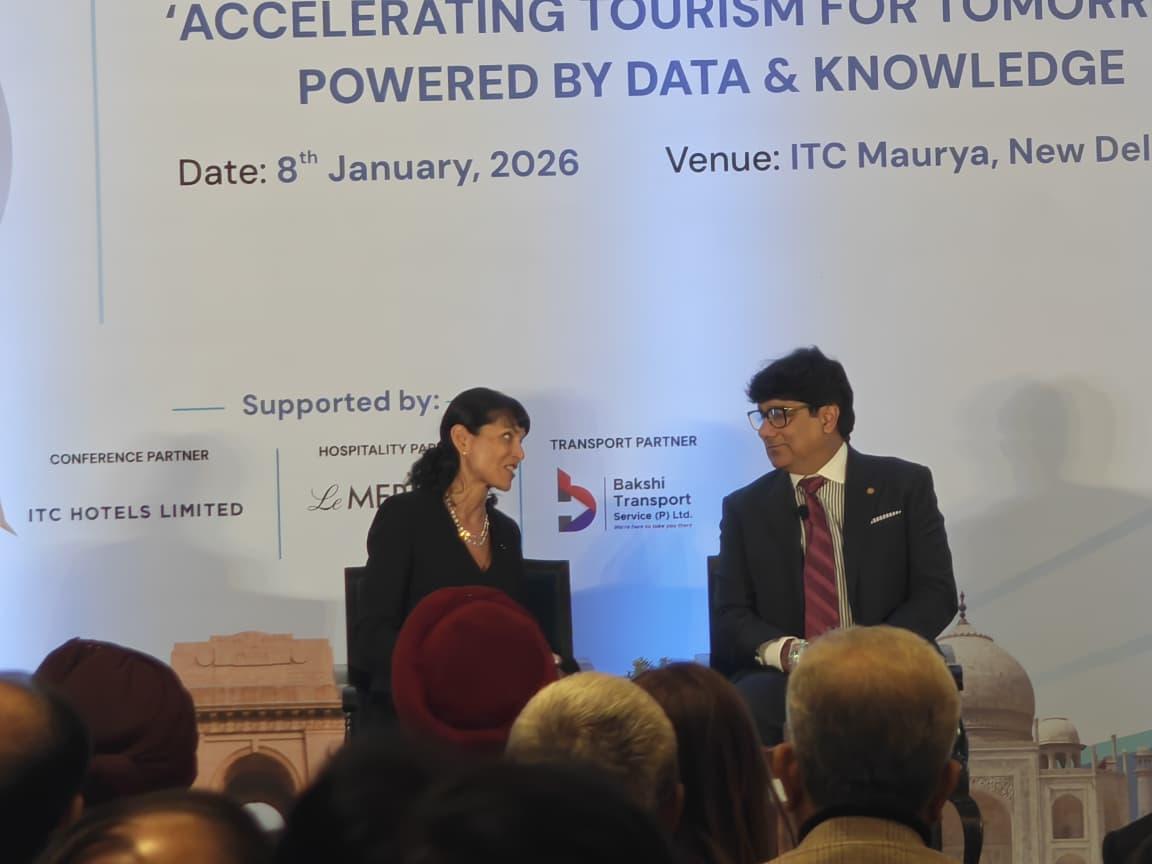
The conversation between Anita Mendiratta, special advisor to UN Tourism Sec. General and Puneet Chhatwal, Managing Director and CEO of IHCL & Chairman- FAITH was a wide-ranging, candid exchange on leadership, policy advocacy, destination marketing, and the future direction of Indian tourism. Framed around Chhatwal’s role as Chairman of FAITH and CEO of Indian Hotels Company Limited, the discussion underscored the need for sustained public–private collaboration, long-term lobbying, and patience to drive systemic change. Chhatwal highlighted FAITH’s role as a unifying platform for a fragmented sector, enabling direct engagement with policymakers on critical issues such as infrastructure, industry status, and international marketing.
A key theme was the acute gap in destination marketing budgets, with the private sector—particularly brands like Taj Hotels, stepping in to complement government efforts through global events and experiential showcases. The dialogue also delved into responsible tourism, moving beyond rhetoric to measurable ESG frameworks, incentives for sustainable construction, and the importance of community-centric development. Chhatwal positioned Indian hospitality brands as uniquely placed to fill a global service-quality vacuum post-COVID, stressing that culture and core values, not just data or loyalty points, are India’s strongest differentiators as it scales its tourism GDP impact.
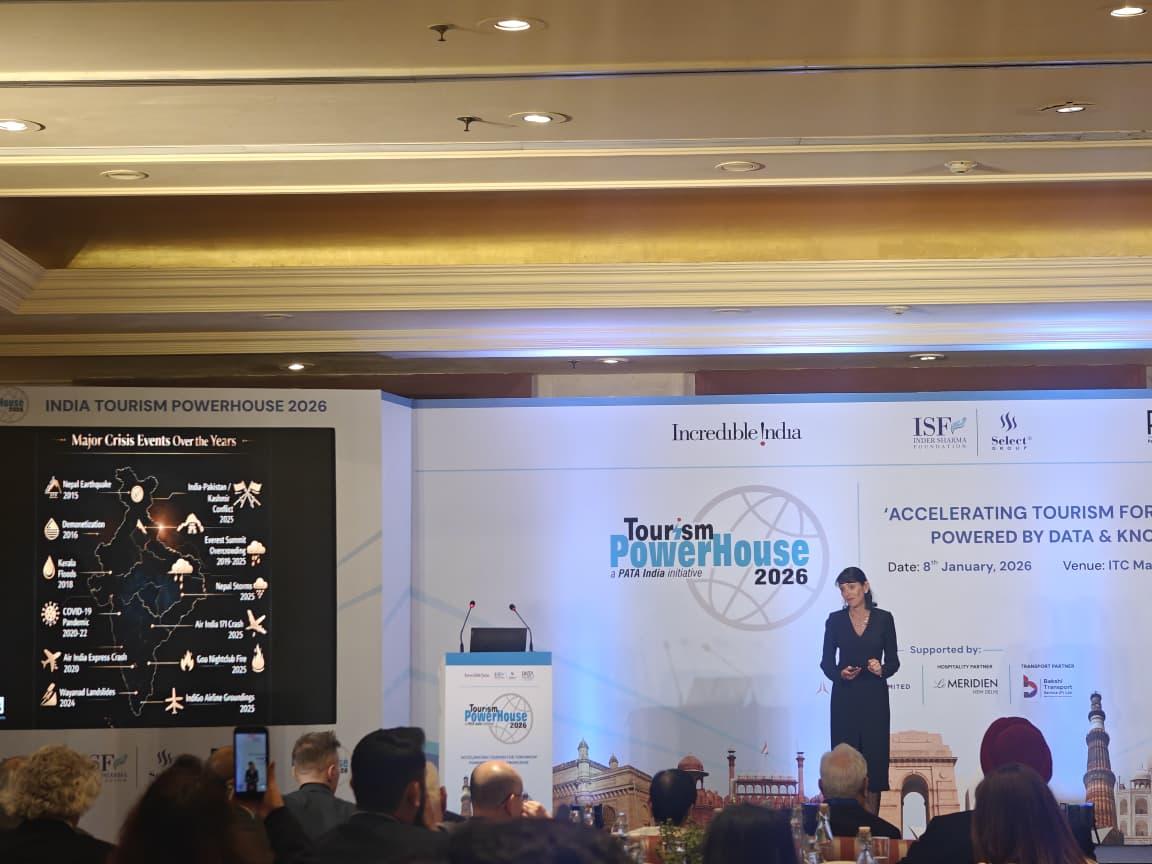
In a separate presentation, Mendiratta emphasised the inevitability of crises in the tourism industry, highlighting the need for preparation, strong stakeholder relationships, and clear communication to ensure recovery and build resilience. She stressed on how strong relationships & trust within the industry can be vital for effective crisis mitigation and sector’s early recovery.
Key recommendations and forecasts
Haiyan Song, Chair of the School of Hotel and Tourism Management at Hong Kong Polytechnic University, also presented an evidence-based outlook for India’s tourism growth, drawing from econometric modelling combined with expert judgment. He noted that while tourism demand across Asia Pacific has shown steady growth since 2021, South Asia continues to lag, accounting for just about 2.5 per cent of Asia’s tourism market by 2025, constrained by limited air connectivity, underdeveloped infrastructure and long-haul travel dependence. For India, however, inbound tourism is projected to rebound strongly, with arrivals expected to reach around 170 per cent of pre-COVID levels by 2028, driven by short-haul travel, family visits, religious tourism, business travel and enhanced global promotion. Key source markets remain the US, UK, Australia and Canada, while China’s recovery remains uncertain due to visa, capacity and economic challenges.
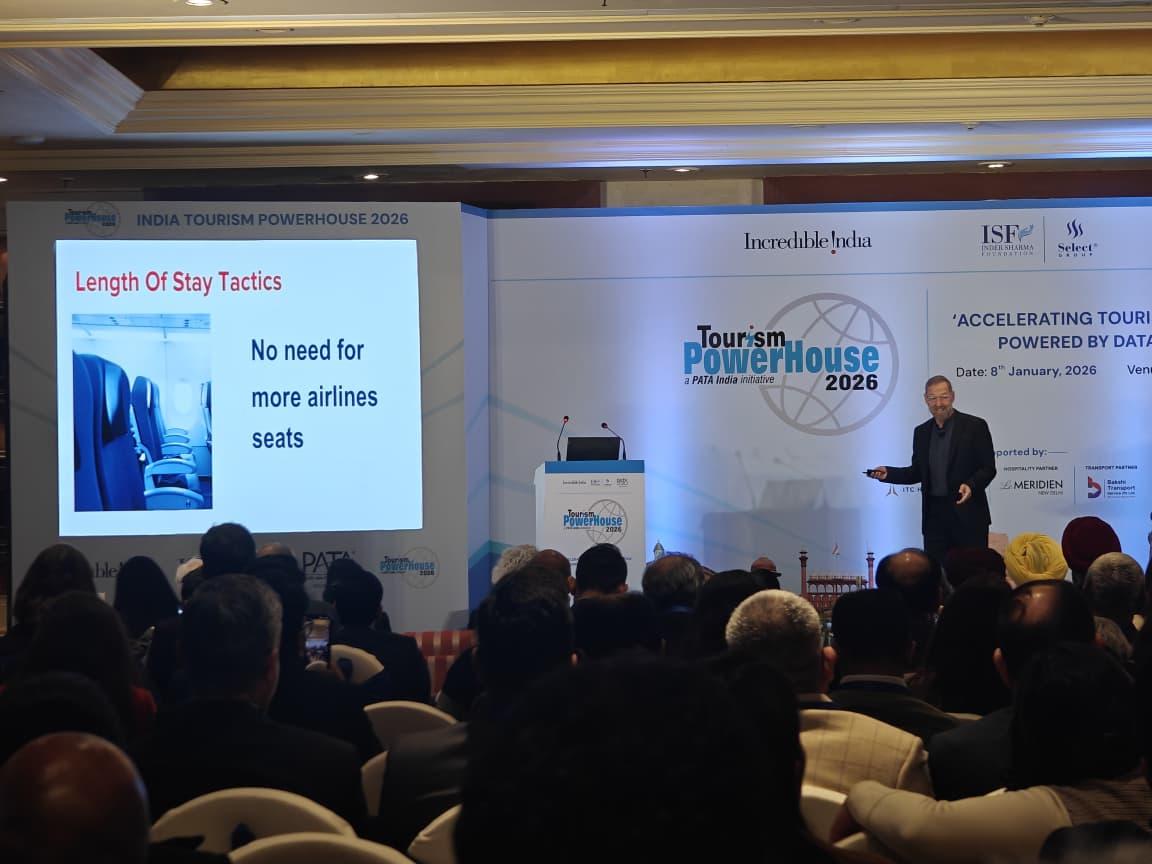
Also speaking at the forum, Alan Merschen, Founder - MMGY and The Sigmund Project, USA, advocated a shift from seat-focused metrics to longer visitor stays for higher yields and lower environmental impact while stressing resilience through diverse visitor profiles amid rapidly changing trends. He stressed that using the Incredible India brand alongside state or city messaging helps global travellers quickly place the destination in their mental map. “People remember experiences, not states,” he noted, citing examples like Bali and the Grand Canyon to illustrate how powerful experience-led branding can be.
Olivier Ponti, Vice President Intelligence Marketing – ForwardKeys an Amadeus Company, Madrid, presented on ‘Managing Data to Win in the Marketplace and Wooing the New Age Traveller’. He urged destinations to prioritise real-time data over instinct, highlighting air connectivity gaps such as 57% of Europeans transiting and low-season US opportunities revealed through algorithms, stating "if people can't get to your destinations, they will not come."
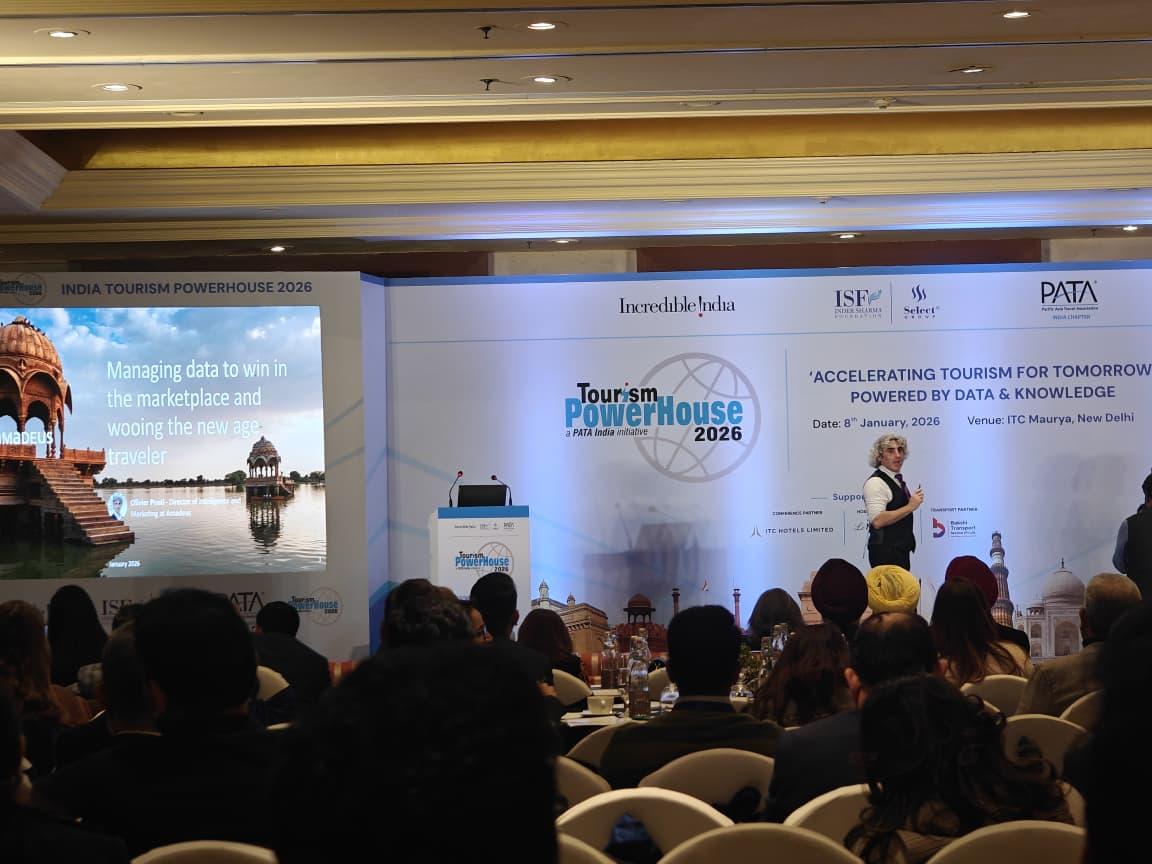
On inbound tourism, India faced a challenging year, he said, adding that while capacity increased, actual demand softened, largely due to geopolitical tensions in the Middle East, India’s key transit hub and broader global uncertainty. At the same time, second-tier Indian destinations showed resilience, Ponti shared, adding that these aligned well with a global shift towards less-crowded locations. Amadeus’ forward-looking data also suggests that seasonality in India is less pronounced than in Thailand or Vietnam and could be further flattened; notably, advanced analytics point to the US market as a strong opportunity to drive inbound travel during India’s traditional low season (September–mid-October), provided connectivity, partnerships and targeted marketing are aligned.
Besides these, there were presentations given by Narzalina Lim, Former Tourism Secretary of the Philippines, Ludwig Rieder, Co-Founder & Chairman – Asia Pacific Projects Inc. and Matt Gibson, CEO of UpTHINK
Notably, the PATA India Tourism PowerHouse 2026 went on for two days and united government, global experts and industry stakeholders to chart a data-driven roadmap for doubling tourism’s economic contribution.