Where Flavours Lead: Why Food is Becoming The Instant Passport for Travellers
 Representative Image (10)
-By Kartika Kiran
As travellers move across the country, they encounter countless variations of the same dish—each shaped by local ingredients, traditions and techniques. Today, food is no longer viewed merely as sustenance; it has evolved into a powerful travel motivator. Increasingly, travellers are willing to journey long distances and spend significantly more to experience authentic and distinctive culinary offerings. And when it comes to food, India indeed takes the upper hand. For centuries, the country has been celebrated as a land of extraordinary flavours, where every region brings its own distinctive culinary identity. Reflecting this growing trend, reports also indicate that India’s culinary tourism market is projected to reach USD 2,498.8 million by 2033, expanding at a robust compound annual growth rate (CAGR) of 24.5% between 2026 and 2033.
Against this backdrop, SATTE 2026 hosted a compelling fireside chat titled “Where flavours lead: Why food is becoming the instant passport for travellers”, where industry leaders discussed how food is increasingly acting as an ‘instant passport’ for travellers, positioning India’s diverse cuisine as a powerful tourism asset. The panel was moderated by Pallavi Mehra, Senior Group Director, Informa Markets and Publisher of Travel Trends Today.
India as a culinary tourism destination

Chef Davinder Kumar, Vice President at Le Meridian Hotel, New Delhi and President at Indian Culinary Forum, highlighted the potential of Indian cuisines to gain greater global recognition. He explained cuisines can broadly be classified into three types of cuisines: Traditional, Modern, and Avant-Garde; the latter being the local Indian food served with a modern twist. This he said, is taking Indian food to the next level and is one reason why Indian food on the world map.
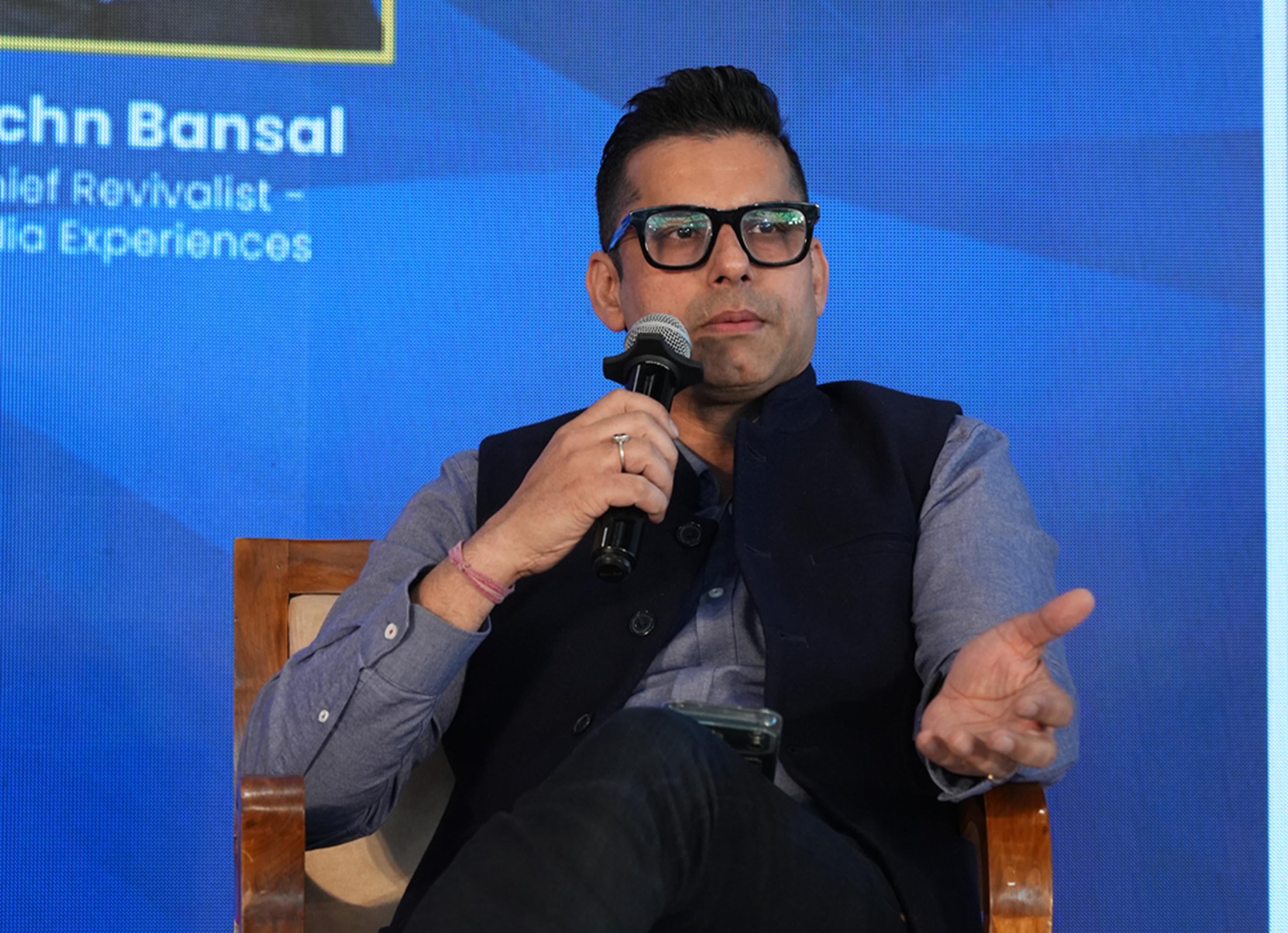
Building on Kumar’s remarks, Sachn Bansal, Chief Revivalist at India Experiences, emphasised the initiatives taken by the government to promote culinary tourism in India. Bansal said, “From the ministerial side, initiatives like Bharat Dekho, Atma Nirbhar Bharat, Skill India and other initiatives bring in lot of festivals, lot of activities in place and from the hotel hospitality standpoint, there is lot of richness in the food where they are going back on the knowledge system, the past knowledge, the Vedas, and creating new recipes.”
Further talking about street food particularly, Bansal added that for international travellers, it acts as an accessible gateway to understanding India through its food. But for locals, they look for flavours, legacy and authenticity in India. According to him, authentic narrative and the spirit to promote the content would highlight the food tourism more.
Curated Culinary Moment
When Mehra asked Chef Kumar to shed light on the importance curated culinary moment through real life example, Kumar said, “There were so many instances where I felt it, while serving many celebrities, many actors, writers, cricket players, or any celebrity from any field. The guests feel happy to see that their likings have been included in the menu.”
Apart from this, he also stressed on the importance of storytelling through food. He noted that people today don’t want just food but experience, story, and emotional connection as well. People want something creative and innovative, which has some story to be spoken about. He also emphasised on the focus on simplicity, fresh and seasonal ingredients, along with the nutrients. He said that food must evoke those multi-senses.
Ministry support for local food ecosystems

Arun Srivastava, Joint Director General, Ministry of Tourism, underlined the role of ministries in elevating locals and creating capacities in terms of food tourism. He pointed out that the Ministry has been actively collaborating with various bodies to enhance local capabilities. They host various workshops and studio kitchen classes at the local festivals and events where they teach the preparation and information of regional dishes to the local audience. “For the capacity building for service providers, short term programs and other programs like ‘Hunar Se Rojgar Tak’ are being introduced, with a focus on practical food skills,” he added.
Marking G20 as an opportunity, Srivastava said that G20 was the one moment where India showcased varieties of cuisines to the global audience. He gave an example, “Through this effort, the usage of millets has multiplied throughout the last 4 to 5 years, the sourcing has been done via various distribution networks, where local distributors also contribute.”
Collaboration between hotels and streets
Talking about how streets and hotels go hand in hand in respect to food, Bansal said that food tourism is a vast area, and can be divided into two parts, Street food walks and culinary walk.
He explained that culinary walks contain the hospitality angle by including the chef cookout. Giving an example he said that travellers go in the old part of the Delhi, like Khari Bawli, a spice market, to understand the spices as a part of culinary trail, and then they go back to the hotel to do a cookout. Travellers stay in hotels where cookout, interaction with the chefs, food tasting, wine or whiskey tasting happens with the palate, making hotels a part of food trails.
The Hygiene Question
Bansal attributed the efforts to address hygiene concerns among Indians to the formation of initiatives by various government bodies. He said that the vendors are vetted and are taught hygiene practices, and bodies like FSSAI also are doing their due diligence while providing them licenses.
Srivastava also added, “Hygiene is somewhere we probably score less. The hygiene is a primary factor, alt hough we work very closely with FSSAI and the Street Food Vendor Association at the national level also. But that must be developed and become part of our culture.”
Chef also raised his concerns regarding hygiene in India and pointed out that the issue is always talked from the foreigner’s perspective and not from the Indian’s, because locals have developed tolerance to that. He added, “Thanks to many multinationals and many other FSSAI regulators, things are improving. But hygiene is a major concern when we talk about street food, like dhabas, small restaurants, the joints and others, particularly. It should be the focus point. Asian countries like Singapore, Hong Kong, and others are hubs of serving street food and have excellent hygiene standards, that has yet to come here. I’m sure time will come where we would be at par.”
Food, an inbound puller
Talking about positioning India’ as primary inbound driver rather than a supporting narrative in our global campaign, Srivastava called attention to the importance of moving away from a typical brand identity to creating a separate brand identity which could be associated with healthy food for the cuisine of the country.
Srivastava pointed out that the world has already acknowledged Indian cuisine and its health benefits, but he said there is a deliberate need to position Indian food globally. “34% of the people are looking as the food as a key driver towards their travel destination. That 34% should also be looking at India as the key driver for their travel decision making. And that is probably, internationally, we may be lacking. It’s very difficult to have one out of three coming to India only for the for the food purpose. This is where we need to work collectively as an industry and the other segment of the society as well,” he added.
Adapting regionality without losing accessibility
Cuisine is not just food, it is also an experience, a connection, and a source of comfort. And maintaining the balance is challenging for a chef or a restaurateur. For Chef Kumar, two pillars are key for maintaining the balance: Authenticity and clarity.
He said that identification and respecting ingredients and its availability is important to retain the soul of the dish. And regional cuisine menu should depend on seasonality also, because the regional cuisine depends on freshness and availability of raw material and spices. This acts as a crucial step towards making the guest experience worth relishing.
Social media influencing food discovery
We’re living in the digital age where people are using social media not just to share their lives but also as a search engine and has become a part of our day-to-day life. Recognising the changing trends Bansal said, “Reels have particularly changed the discovery mindset. It has become a more structured way of exploring and looking at absorbing things. Digitally, supplier’s reach has gone multifold and shopkeepers or legacy keepers are setting the narrative to maintain the authenticity and legacy. Reels are enhancing the imagination and making people visit the place much in advance and when they are there then they are truly indulging in it.”
He highlighted the importance of digital straightforwardness, stressing that honesty about food ingredients makes expectations and the dining experience more authentic, as the digital and physical realities align. Further answering Mehra’s question on why food can be the fastest visa for India, Bansal added, “Because from the tourism standpoint, it is more about experiencing India.”
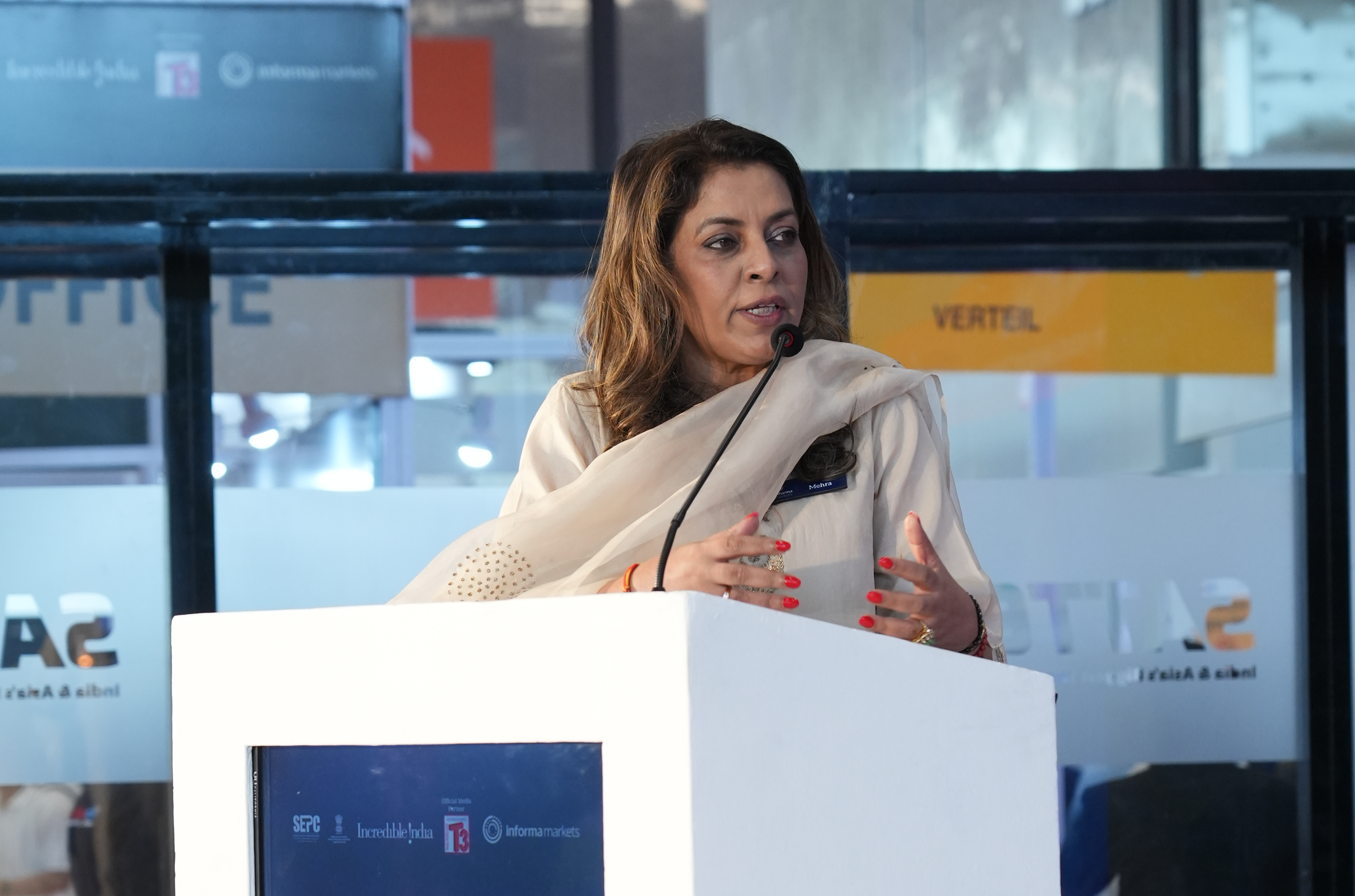
The discussion concluded with Mehra’s remarks, as she highlighted, “India is vast and diverse; we are many countries within one country; every region has its own flavour, taste, and own spices. The industry and social media, together are elevating Indian food tourism, both globally and nationally and bringing it under one platform.”