Booking Holdings plans to combine B2B operations across platforms; Asia to lead the travel growth in '26: Agoda
 L TO R-Damien Pfirsch, CCO at Agoda & Andrew Smith, Sr VP-Supply
As announced at the recent Agoda Media roundtable, Booking Holdings will soon be unifying Agoda, Booking.com & Priceline B2B arms, aiming at simplifying engagement for global partners and enhancing innovation capabilities. Agoda senior officials also shared some interesting data around the APAC region highlighting a growth of about 9% CAGR (2025–2027), far outpacing other regions and remaining the world’s fastest growing travel region throughout 2026. Detailed coverage below:
In a significant shift, Booking Holdings will be consolidating the B2B operations of Agoda (a part of Booking Holdings), Booking.com and Priceline into a single global entity, as the company looks to streamline partnerships, unlock scale and accelerate innovation across markets.
Announced during a media roundtable in Bangkok, the move will see Agoda’s existing B2B arm, Rocket Travel by Agoda transition into a unified structure bringing together supply, technology, and teams across regions.

“We want to offer a more cohesive, streamlined experience to our partners, because today many partners work with multiple Booking Holdings brands but engage with different teams and processes. We want to make sure that we offer the best of Booking Holdings to our partners by bringing all supply, technology, and teams into one place,” said Damien Pfirsch, Chief Commercial Officer at Agoda.
The integration, he said, is driven by three core objectives: simplifying engagement for global partners; providing unified access to Booking Holdings’ inventory and technology and enhancing innovation capabilities.
The transformation, which spans teams across the US, Europe and Asia, is expected to take time, but signals a clear shift towards a platform-led, partnership-first growth model, as per Pfirsch.
Asia takes centre stage as travel demand reshapes globally; demand for India rising
This consolidation news comes at a time when Asia is emerging as the epicentre of global travel growth, driven by strong intra-regional demand and evolving traveller behaviour due to uncertainties in travelling to the Middle Eastern and European pockets.
A Euromonitor report estimates that Asian travellers will make nearly 0.5 billion trips by 2027, with Asia-Pacific expected to grow at ~9% CAGR (2025–2027)—far outpacing other regions and remaining the world’s fastest growing travel region throughout 2026. The region’s strong intra-Asia travel flows, coupled with rising competition among destinations in Southeast Asian markets like South Korea and Japan, are also fuelling demand for targeted, high-intent marketing solutions.
At the same time, travel patterns are becoming more fluid: 40% of travellers plan to split travel equally between domestic and international trips. Repeat travel and regional exploration are rising sharply.
“International travel across Asia continues to grow strongly, and most of our demand destinations are within the region. Japan is an example of a mature travel market where travellers go deeper into the country and repeat visits frequently,” said Andrew Smith, Sr. Vice President, Supply at Agoda.
He highlighted another defining trend across Asia: the rapid rise of secondary destinations, with demand growing faster than traditional tourism hubs. Agoda reports also say that interest in secondary destinations across Asia-Pacific is rising faster than traditional hubs—by an average of 15 percentage points, with markets like Japan (+30pp) and Indonesia (+28pp) leading the trend, while India is also seeing steady momentum (+5pp).
“Travellers are coming back repeatedly but going further afield within the same country. This shift is helping disperse tourism spending, reduce overcrowding in major cities, and bring economic benefits to local communities,” said Smith.
On the customer side, AI is already influencing behaviour. 63% of Asian travellers are willing to use AI for trip planning. “People in Asia are already using AI to plan their trips—this is not experimental anymore; it’s happening at scale.” Yet, 56% say lack of personalisation impacts booking decisions, an Accenture report (The travel industry's new trip) shows.
India, a high-growth outbound market but underpenetrated inbound
Within Asia, India stands out as a high-growth market, particularly on the outbound front, though inbound tourism remains underdeveloped, agrees Smith, while answering a query posed by T3. “India is a high-growth destination where many travellers are experiencing it for the first time… but inbound is something we haven’t fully cracked yet,” he said.
He noted that while the industry has “not fully cracked” inbound travel into India yet, the country is on track to emerge as a major global travel powerhouse over the next five years, driven by growing international interest and improving digital access.
A key barrier, he highlighted, lies in fragmented supply. “The first step is ensuring that all supply, from major hotel chains to smaller regional players, is available online,” he said, underlining the need for deeper inventory integration across platforms.

To address this, Agoda is also actively expanding its footprint into India’s secondary and emerging destinations, aiming to bring more diverse accommodation options onto its platform and unlock new travel circuits beyond traditional hotspots.
Smith also stressed the importance of localisation in driving inbound growth. “Enabling travellers to browse, book, and interact in their own language, alongside access to familiar payment systems and support, is critical to improving conversion and overall experience.”
Acknowledging that India can be overwhelming for first-time visitors, he said platforms must bridge the comfort gap by offering a more intuitive and reassuring user journey.
Beyond technology and supply, he pointed to the role of destination marketing. “Many travellers are still unaware of the diversity of experiences India offers,” he said, adding that closer collaboration with tourism boards will be essential to build global awareness and drive inbound demand.
Agoda’s B2B strategy & tech-first approach
Agoda being one of the topmost downloaded apps in the Asian region (excluding China), has been positioning itself as a technology-first company, using machine learning and data to optimise both user experience and partner revenue. “Machine learning enables us to personalise everything, from hotel selection to pricing and offers,” Pfirsch shared further.
Applications include personalised search results, dynamic pricing optimisation, targeted loyalty offers, performance marketing services for partners. The company also runs end-to-end marketing operations for partners, including campaign management and customer acquisition.
Agoda is taking a measured, backend-first approach to AI, focusing initially on operational efficiency before expanding customer-facing tools. Pfirsch further said that the company has already developed over 200 internal AI tools, supporting customer service, analytics and more.
Also, at the core of Agoda’s growth is its B2B partnership model, which embeds travel into multiple consumer ecosystems rather than relying solely on direct bookings.
Pfirsch said that financial institutions, airlines, retail platforms are emerging as critical demand drivers. Agoda powers travel for global banks through white-label solutions, enabling customers to earn and redeem loyalty points on travel—an area Pfirsch highlighted as particularly powerful due to travel’s “emotional and experiential value” compared to transactional rewards.
Airlines, meanwhile, are leveraging hotel integrations both as loyalty redemption channels and as ancillary revenue streams—an increasingly important lever for profitability. Retail ecosystems and super apps represent another fast-growing segment. Even competing OTAs and tour operators form part of this network, reflecting the industry’s deeply interconnected supply model, serving diverse traveller needs.
Destination marketing organisations (DMOs) are also increasingly partnering with Agoda to drive both awareness and conversions. Tapping into destination marketing budgets, Agoda is helping tourism boards drive bookings with targeted campaigns. These campaigns have delivered strong results in double digit ROI on ad spend, shared Firsch.
New beginnings in Bangkok from April 1
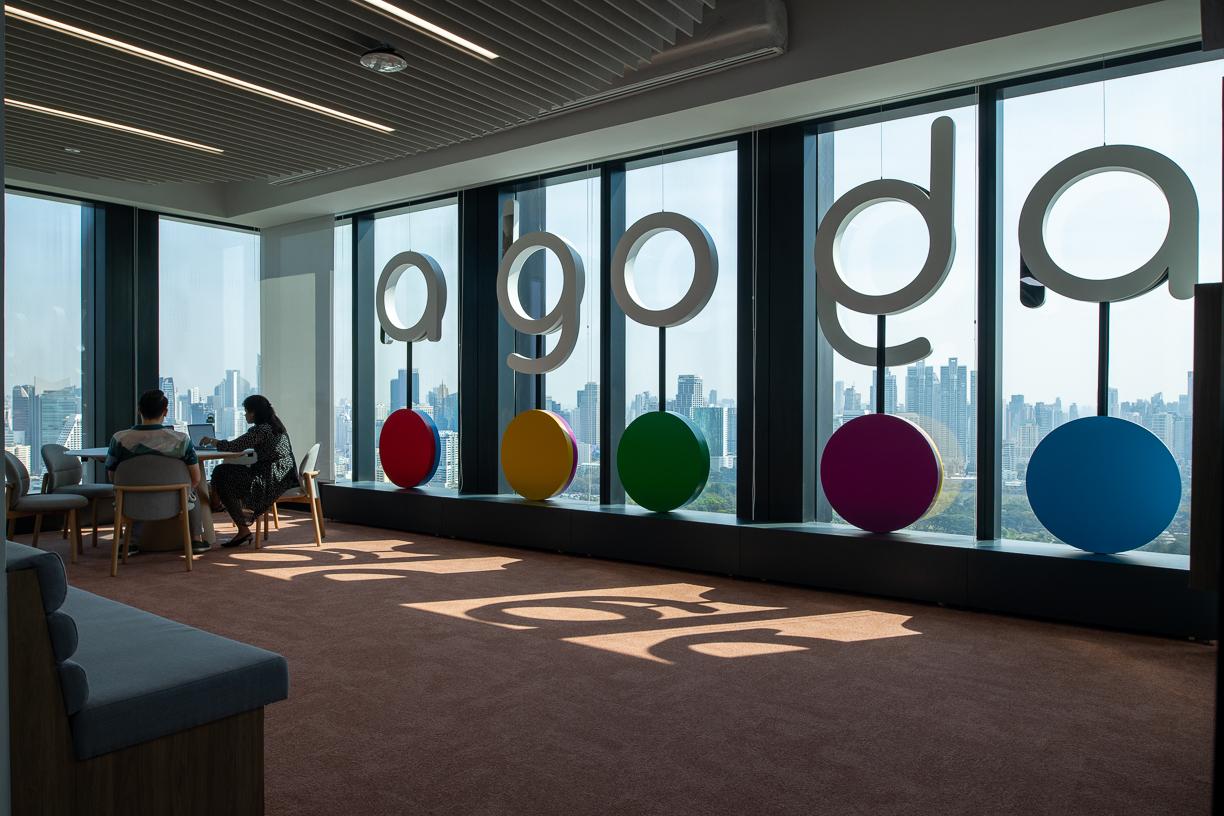
Agoda has also relocated its Thailand operations to One Bangkok, marking its next office move in the country in over two decades. The company now occupies seven floors in Tower 5 of One Bangkok, positioning itself as a key anchor tenant within the landmark development. Each floor is built around distinct themes such as wonder, culture, and adventure, collectively designed to reflect Agoda’s brand ethos of diversity, creativity, and connectivity.
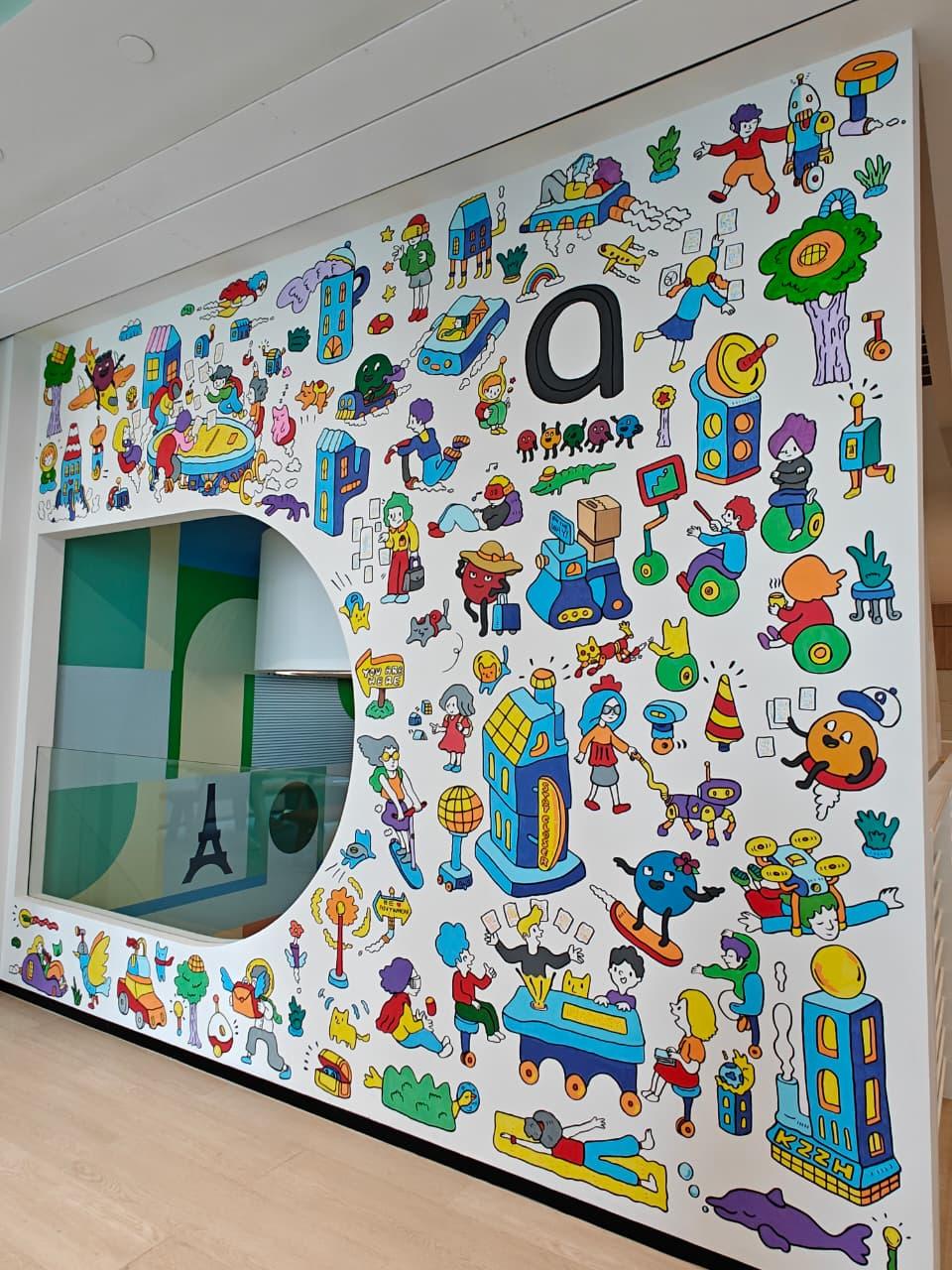
While art and design play a central role in the new workspace, with large-scale murals by local and international artists, thoughtful rooms created like wellness pods, exercise room, professional massage service by visually impaired therapists, mother’s room, truly showcase the employee wellbeing taken as a top priority. The official launch of this new corporate office is from April 1, 2026; Singapore remains the headquarter of Agoda.
The online travel company Agoda offers access to over six million properties globally alongside flights and activities, with its platform available in 39 languages and supported by round-the-clock customer service.