Revitalising “Brand India”
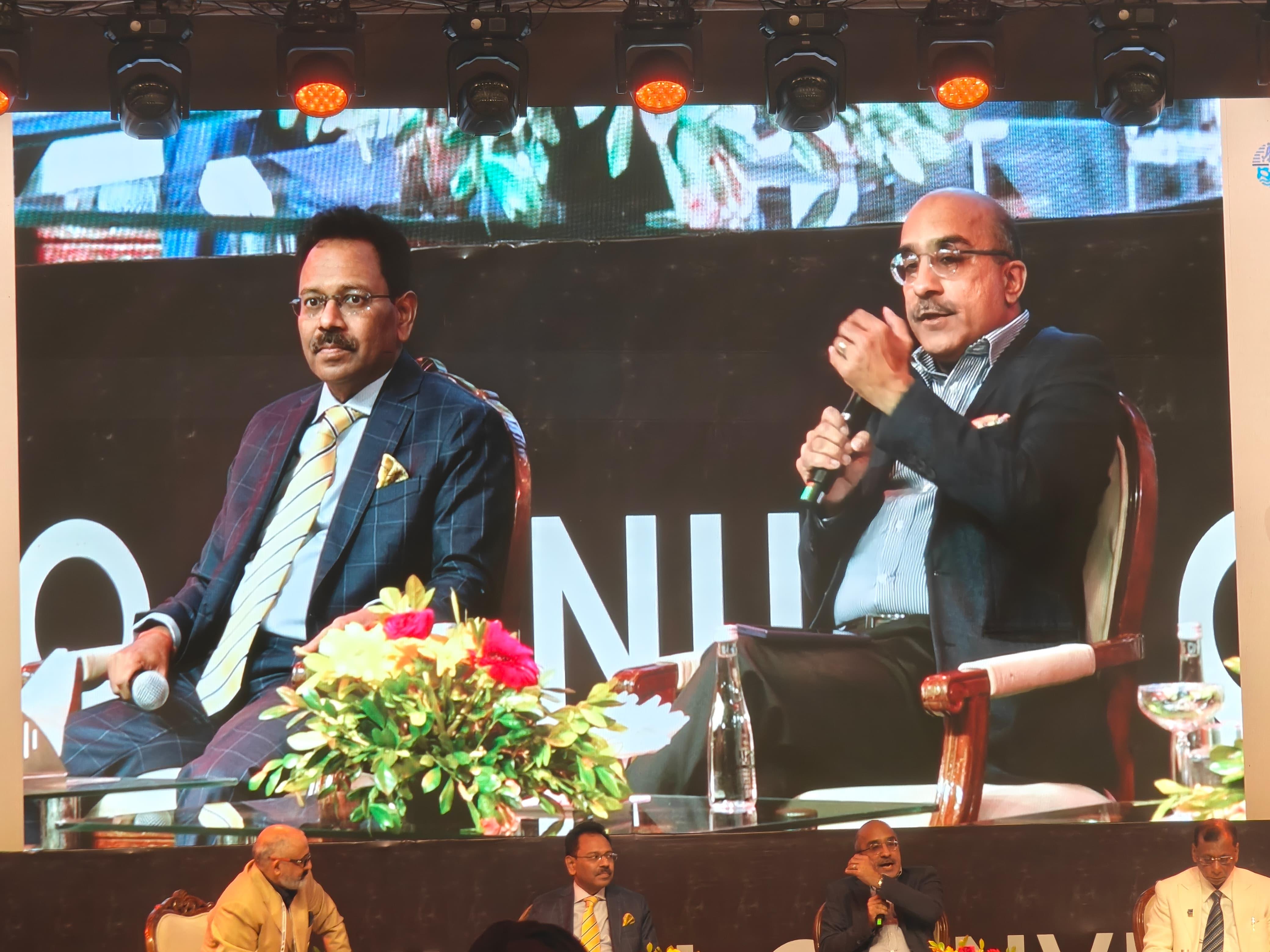
 Industry & govt. stalwarts at the recent discussion forum
Brand India, once synonymous with the iconic "Incredible India" campaign, has somewhere lost its voice in a marketplace that no longer responds to traditional tourism marketing. As promotional budgets continue to shrink and visibility on global platforms blurs, India needs to transform its approach or risk becoming invisible in the world's most competitive tourism landscape. The path forward demands nothing less than a complete reimagining of how India tells its story to the world. The industry professionals put forth a valid discussion.
Even as India celebrates record outbound travel and infrastructure expansion, its inbound tourism story tells a more cautious narrative. While India welcomed 9.2 million foreign tourists in 2023, up from 6.2 million in 2022, the figures were still 15% below pre-pandemic levels of 10.9 million in 2019. However, 2024 saw a rise, as per the recent data. Yet this recovery comes with warning signs: promotional budgets remain constrained, overseas tourism offices remain shut and the country now competes in a far more crowded marketplace where neighbouring destinations are aggressively marketing experience-led travel, easing visa rules and enhancing connectivity like never before.
Notably, global competitors like Thailand, Turkey and Saudi Arabia, have surged ahead with aggressive branding, digital marketing, and experience-led storytelling. The question confronting India’s tourism stakeholders today is clear: how can Brand India reclaim its visibility, relevance and emotional connect in a hyper-competitive tourism world? This very question framed the powerful discussion on “Revitalising Brand India – Promotion and Marketing” at the recent industry forum in Odisha. The session, moderated by Naveen Kundu, Managing Director, Tourism Futures.AI, brought together an eminent panel of tourism leaders like Suman Billa, IAS, Additional Secretary & Director General, Ministry of Tourism, Government of India; Rajeev Kohli, Joint Managing Director, Creative Travel Pvt. Ltd. and J.K. Mohanty, Managing Director, Swosti Group.
The consensus from the panel? Brand India must transform from a government-led campaign into a collective national movement, built by industry, driven by technology and powered by emotion. Excerpts from the discussion below:
From Visibility to Virality
“Marketing India is not a campaign; it’s a national duty. We know we have a great country, but we need to make noise about it,” said Kundu, opening the session with a rallying call. He further added that promoting India must move beyond legacy slogans and traditional imagery to embrace authenticity, emotion, and digital storytelling.
“We’ve seen countries like Australia and the West Indies use their national icons to build tourism narratives. I’m surprised India hasn’t done that yet.” He highlighted ‘branding India to the world isn’t only about what the government is doing; it’s about what we, as businesses, are doing to survive and transform.’
Adding to this, Billa, who leads India’s national tourism strategy, highlighted that the ministry is transitioning from linear, one-directional marketing to a collaborative, voice-driven approach. Citing his earlier work on the 2017 “Incredible India” Version 2 campaign, which launched with a INR 450 crore global budget, he said the context has since changed drastically.
“The campaign achieved notable results and sustained momentum over time. However, the marketing landscape has fundamentally transformed since then. The linear narrative of creating content and pushing it globally no longer works. Today, there are thousands of independent voices speaking about India. Our challenge is to harness and amplify them, not drown them out,” Billa explained.
He laid out three pillars for the Ministry’s future marketing vision: harnessing community-generated content, ensuring convergence between Centre, states, and industry, and positioning India through its soft power. “India must communicate through diverse voices, with tourism serving as one—potentially dominant—voice among many. When people consider visiting India, it should represent an expression of our soft power across multiple sectors,” he emphasised.
To achieve this, Billa suggested cross-sectoral collaborations, for instance, partnering with brands such as Royal Enfield, Tata Tea, and FabIndia, to weave Indian experiences into lifestyle narratives across the world.
“We must transcend the narrow confines of selling tourism as a standalone product. Instead, we should position India strategically across diverse and unexpected platforms and spaces. Over the past decade, India has emerged as the world’s fastest-growing large economy. Global awareness of India is at an all-time high, and the world is taking notice. Our marketing approach must evolve beyond simply offering affordable accommodation and great experiences,” he asserted.
Has the Brand India aged?
Speaking with characteristic candour, the industry veteran Kohli argued that India’s tourism brand has stagnated. “India today doesn’t have a brand. We’ve been out of the market too long. Incredible India was iconic but it’s 20 years old. No global brand has stayed unchanged for two decades.”
“Look at how Saudi Arabia has knocked it out of the park with their tourism advertising,” he pointed adding that India’s storytelling still leans heavily on ‘elephants, temples, and the Taj Mahal’ while modern travellers seek self-enrichment, community, and transformation. “We can reinvent ourselves starting from zero. That’s the opportunity we have today.”
Kohli challenged the industry to stop depending solely on the government and co-own Brand India’s reinvention. “We need to ask: what does India mean to the new-age traveller? What’s our brand persona? The day of waiting for the Ministry to act is over. It’s time we define and fund our own voice. We can do things on our own—we have the money.”
He also emphasised leveraging AI and data-driven marketing, especially to target under-30 travellers who represent the next wave of global mobility. “They travel to be better versions of themselves,” he said, adding “we must communicate in that language.”
Bridging the state-level disconnect Mohanty drew attention to a structural gap that has long plagued India’s tourism promotion—the lack of coordination between the Centre and the states. “When Incredible India was launched in 2002, it succeeded because there were funds and dedicated offices abroad. Today, most have closed, and embassies are expected to promote tourism without proper expertise or resources. In countries like Vietnam and China, embassy officials don’t have the language skills or destination knowledge to promote India,” he pointed.
He called for quarterly coordination workshops between the Ministry and state tourism departments to ensure unified branding and messaging. “Each state has its own strengths-Odisha has beaches, temples, and wildlife; Kerala has wellness; Rajasthan has heritage. Together, we can project a holistic, multi-dimensional Brand India,” Mohanty stressed. He also proposed creating a dedicated Director General for Marketing within the Ministry to drive professional, continuous global promotion.
Building brand together
Responding to these perspectives, Billa underscored the need to move toward a Brand USA-style model, where the industry contributes funds matched by the government, ensuring flexibility and long-term planning. “Globally, successful tourism boards are industry-led and government-supported. India needs to adopt that model if we want to compete,” he said.
He added that the Ministry is working on embedding tourism professionals and PR agencies within embassies, developing curated influencer residencies, and expanding digital storytelling partnerships that highlight wellness, heritage, and sustainability. “The onus is not on the government alone,” Billa noted. “The industry faces the market daily; it must distil its wisdom and guide policy through shared strategy.”
The session closed with a call for unity and reinvention. Kundu emphasised that organisations like IATO must take ownership by co-organising roadshows, contribute funds and campaigns globally, while Kohli reminded that “the age of subsidies is over.” “If we want to grow, we must co-fund, co-create, and co-own the brand we want the world to see,” he said.